On this page
Fillet is the most tender steak on the animal, and the easiest to spoil. It comes from the psoas major, a long muscle tucked under the backbone that does almost no work, so there is very little connective tissue to break down. It is also lean, with only a little fat running through it. That gives you a soft, almost buttery texture and a mild, clean beef flavour. It also means there is nothing to protect it if you overcook it.
So cooking fillet steak well comes down to three things. Build a deep brown crust, add the richness the meat does not carry itself, and stop early. Butter does the second part. A thermometer does the third.
Before you start
- Take the chill off. Out of the fridge 20 to 30 minutes before cooking, or 45 minutes for a whole piece. Fillet steaks are thick, and a fridge-cold centre means a grey band under the crust by the time the middle is ready.
- Dry it. Pat every surface dry with kitchen paper. A damp steak steams before it browns.
- Tie it if it is loose. A fillet steak holds its shape best with a loop of butcher's string tied round its middle. It stays tall and round and cooks evenly, and you snip the string off before serving.
- Salt it. Generously, on all sides, either just before it goes in the pan or at least 45 minutes ahead, uncovered in the fridge. Avoid the window in between, from a few minutes to about half an hour, when the salt has pulled moisture to the surface and the steak goes in wet. Pepper can go on before or after.
How to cook fillet steak in a pan
This is the method for a single fillet steak of 3 to 4cm, cooked to medium-rare.
- Get the pan very hot. Cast iron or heavy stainless steel, over your highest heat, until it is just smoking. Add a thin film of rapeseed, groundnut or sunflower oil.
- Sear the faces. Lay the steak in and leave it for about 2 minutes, until the underside is deep brown and releases easily. Turn it and do the same on the other side.
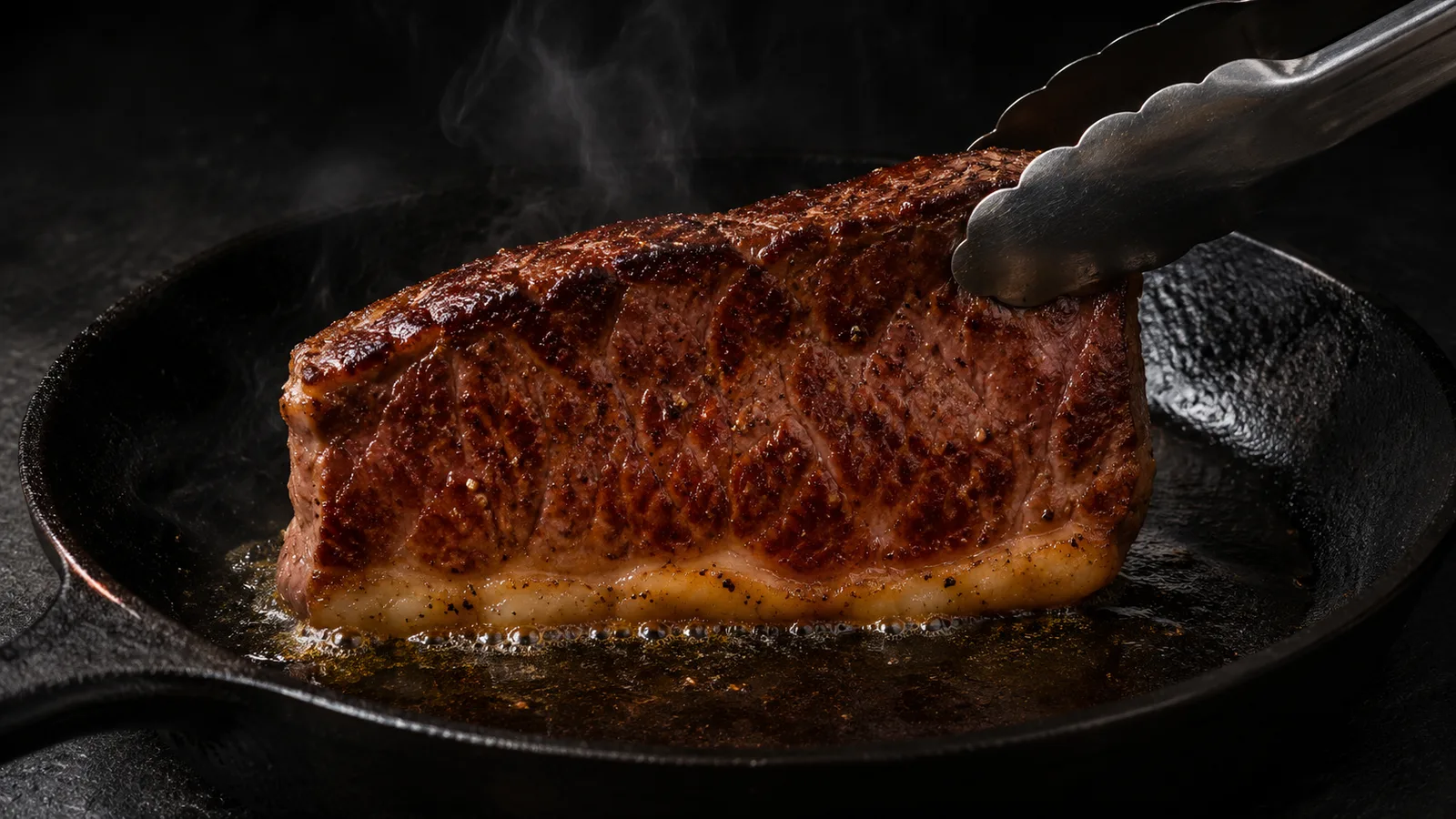
- Sear the edges. A fillet steak is tall, so its sides matter. Hold it on its edge with tongs and roll it round for about a minute until the whole outside has colour.
- Turn the heat down and add butter. Drop to medium. Add a good knob of butter, about 30g, with a crushed clove of garlic and a sprig of thyme or rosemary.
- Baste. Tilt the pan towards you so the butter pools, and spoon it over the top of the steak again and again. Turn the steak every minute. You want the butter foaming and nut-brown; if it starts to blacken, lift the pan off the heat for a few seconds.
- Check the centre. Probe it from the side into the middle, and take it off a few degrees below your target.
- Rest it. Five minutes on a warm plate, with a spoonful of the pan butter over the top.
Fillet steak cooking times
Total time in a smoking-hot pan, searing then basting and turning, for a steak that has been out of the fridge for 20 to 30 minutes.
| Thickness | Rare | Medium-rare | Medium |
|---|---|---|---|
| 2.5cm | 4–5 min | 5–6 min | 7 min |
| 3cm | 5–6 min | 6–7 min | 8–9 min |
| 4cm | 7–8 min | 8–10 min | 10–12 min |
| 5cm | Sear for 5 min, then 5–6 min at 200°C | Sear for 5 min, then 7–8 min at 200°C | Sear for 5 min, then 9–10 min at 200°C |
Thicker than 4cm? Sear all over in an ovenproof pan, add the butter, then put the pan in an oven at 200°C and check the centre every 2 minutes. Baste once more when it comes out.
Times are a guide. Fillets vary in width along their length, so two steaks of the same weight can cook at different speeds. Let the thermometer decide.
Core temperatures for fillet
| Doneness | Steak: take it off at | Whole fillet: take it off at | After resting |
|---|---|---|---|
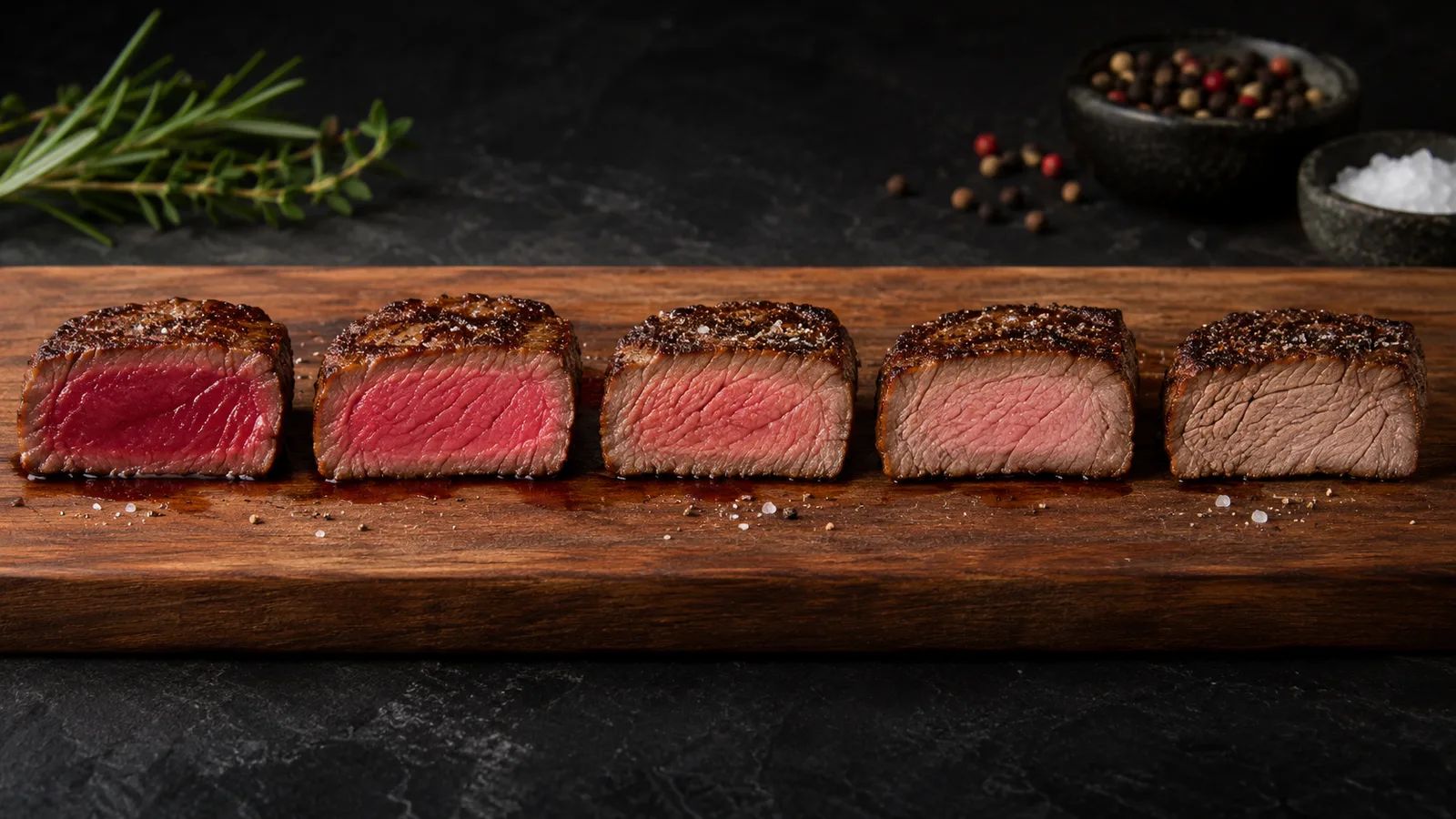
| Rare | 48°C | 45°C | about 50°C |
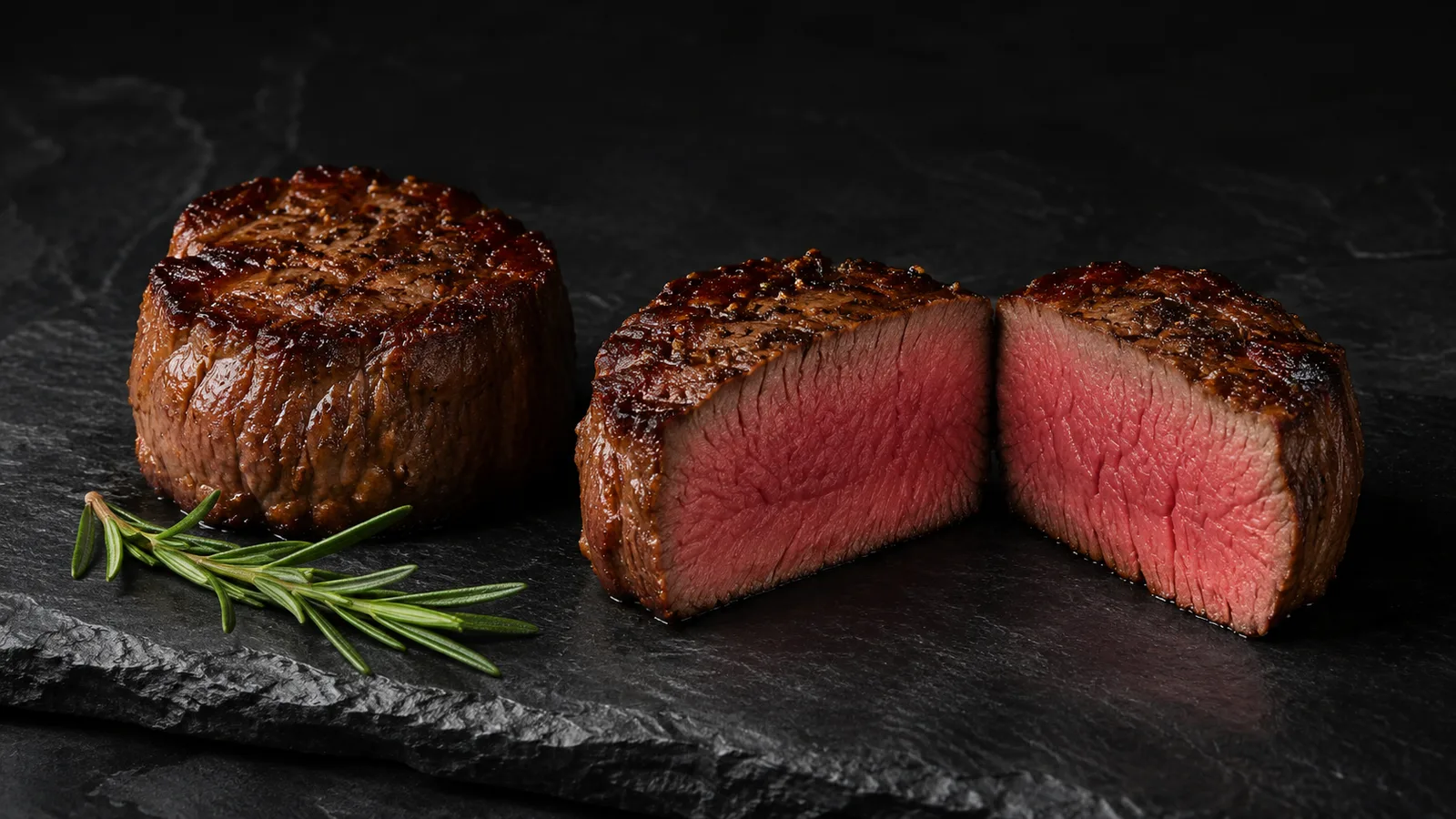
| Medium-rare | 52°C | 50°C | about 55°C |
| Medium | 57°C | 55°C | about 60°C |
| Medium-well | 62°C | 60°C | about 65°C |
| Well done | 68°C | 66°C | 70°C and above |
We would cook fillet rare or medium-rare, and no further than medium. Past that, the lack of fat inside the muscle shows and it turns dry and firm. If you like steak well done, butterfly the fillet: slice it almost in half through its height and open it out like a book. It cooks through in about half the time and stays juicier. Or choose a cut with more marbling, such as ribeye; our ribeye guide covers it.
The Food Standards Agency's guidance is that whole cuts of beef, such as steaks and joints, can be served pink or rare as long as the outside has been properly cooked.
How to cook a whole beef fillet
A piece of fillet roasted whole is one of the simplest special-occasion dinners there is. A 500g piece feeds two generously; 1kg feeds four to five.
- Trim and tie. If you see any silverskin, the thin, shiny membrane on the surface, slide a thin knife under it and cut it away; it does not melt and it makes the joint curl. Tie the fillet with string every 2 to 3cm so it keeps an even thickness. If one end tapers, tuck it under before tying.
- Season. Salt it all over, ideally an hour or more ahead, uncovered in the fridge. Take it out 45 minutes before cooking.
- Sear. Heat the oven to 200°C. Brown the fillet all over in a hot ovenproof pan with a little oil, turning it every minute, for 4 to 5 minutes in total. Add butter, garlic and thyme for the last minute and baste.
- Roast. Move the pan to the oven. For medium-rare, take the fillet out when the centre reads 50°C.
- Rest and slice. Rest it for 10 minutes. Snip off the string and slice it into rounds 1.5 to 2cm thick.
| Weight | Rare | Medium-rare | Medium |
|---|---|---|---|
| 500g | 10–12 min | 12–15 min | 16–18 min |
| 1kg | 12–15 min | 15–20 min | 20–25 min |
Roasting times are after the sear, at 200°C. Thickness matters more than weight: a long, thin piece cooks faster than a short, thick one, so start checking the centre 5 minutes early.
Serving fillet
Because fillet is mild, it takes a sauce well. Peppercorn, béarnaise and a red wine reduction made in the pan are the classics. Keep it simple with the pan butter, or let a crust do the work: press cracked black pepper into the steak before searing. Slicing direction matters less with fillet than with harder-working cuts, but a whole fillet should still be cut across into rounds, never lengthways.
Choosing your fillet
Our fillet steak is sold by weight, at 250g, 500g or 1kg, so you can buy a single steak or enough to roast as a piece. Cook it rare to medium-rare, with plenty of butter in the pan.
 Aberdeen Angus Fillet SteakFrom £20.00
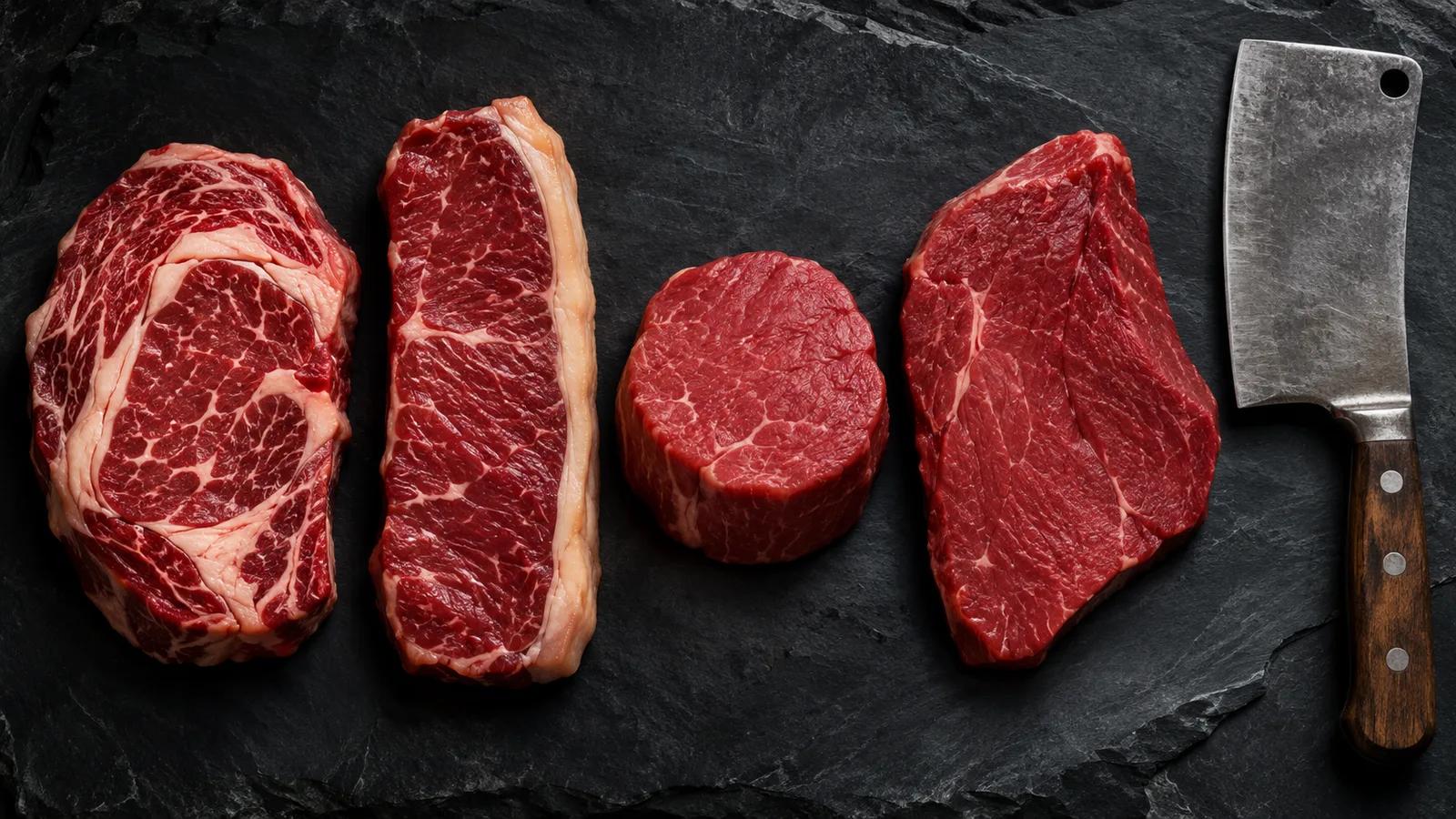
To see where the fillet sits on the animal, next to sirloin and rump, read our cuts of beef guide. For every cut's times on one page, see steak cooking times, and for a steak with a fat edge to render, try the sirloin guide.
Step by step
Take the chill off
Take the fillet steak out of the fridge 20 to 30 minutes before cooking and pat it completely dry with kitchen paper.
Season
Salt the steak well on all sides just before it goes in the pan, or at least 45 minutes ahead and leave it uncovered in the fridge.
Heat a heavy pan
Heat a cast-iron or heavy-based frying pan over a high heat until it is just smoking, then add a thin film of rapeseed or groundnut oil.
Sear the faces and edges
Sear the steak for about 2 minutes a side until deep brown, then hold it on its edge with tongs and roll it round for a minute to colour the sides.
Baste in butter
Turn the heat to medium. Add a knob of butter, a crushed garlic clove and a sprig of thyme. Tilt the pan and spoon the foaming butter over the steak, turning it every minute.
Check the core temperature
Push a probe thermometer into the centre from the side. Take the steak off at 48°C for rare, 52°C for medium-rare or 57°C for medium.
Rest and serve
Rest the steak on a warm plate for 5 minutes, spooning a little of the pan butter over it, then serve whole or cut in half.
Questions and answers
How long do you cook fillet steak for medium-rare?
For a fillet steak about 3cm thick, sear it in a smoking-hot pan for about 3 minutes a side, basting with butter for the last 2 minutes. A 4cm steak needs 8 to 10 minutes in total, turning every minute or so and rolling it on its edge. Take it off when the centre reads 52°C and rest it for 5 minutes; it will settle at about 55°C.
What temperature should fillet steak be inside?
Measured in the centre after resting: about 50°C for rare, 55°C for medium-rare and 60°C for medium. Take a steak off the heat 3 degrees or so below your target, and a whole fillet about 5 degrees below, because the meat keeps cooking as it rests.
When do you add butter to fillet steak?
After the sear, not before. Sear the steak in a thin film of oil over a high heat, then turn the heat down to medium and add a good knob of butter with a crushed garlic clove and some thyme. Tilt the pan and spoon the foaming butter over the steak for the last 2 to 3 minutes. Added at full heat, butter burns before the steak is done.
How long does a whole beef fillet take to roast?
Sear a 1kg piece of fillet all over in a hot pan, then roast it at 200°C for 15 to 20 minutes for medium-rare, or until the centre reads 50°C. A 500g piece takes about 12 to 15 minutes, because thickness matters more than weight. Rest it for 10 minutes before slicing.
Can you cook fillet steak well done?
You can, but fillet has very little fat inside the muscle, so it dries out once it goes past medium. If you like it well done, butterfly it: slice it almost in half through its height and open it out like a book. It cooks through in half the time and stays juicier. Otherwise, a ribeye is more forgiving.