On this page
Steak cooking times are a starting point, not a promise. Thickness, how cold the steak is, how hot your pan runs and how much fat the cut carries all move the number. That is why every time on this page comes with a core temperature. To cook steak the way you like it every time, use the times to plan and a probe thermometer to decide when it is done.
The times below assume a steak that has been out of the fridge for 20 to 30 minutes and a heavy pan, ideally cast iron, heated until it smokes.
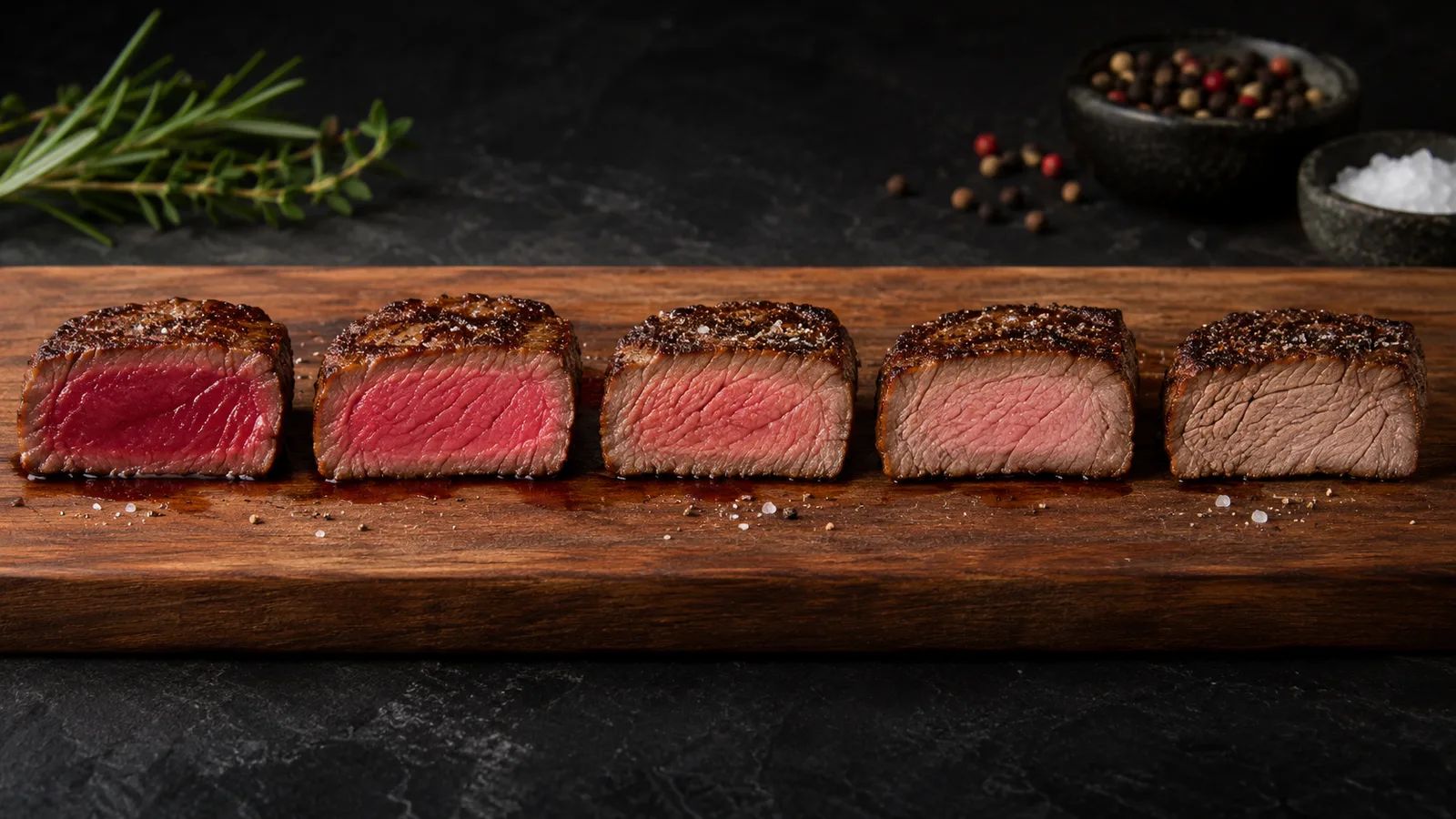
Steak doneness chart
Take the steak off the heat at the first temperature. It keeps cooking as it rests and settles at the second.
| Doneness | Take it off at | After resting | What it looks like inside |
|---|---|---|---|
| Blue | 40–42°C | below 45°C | Dark red and barely warm; only the outside is cooked |
| Rare | 48°C | about 50°C | Deep red, warm centre, soft and very juicy |
| Medium-rare | 52°C | about 55°C | Red-pink and warm all through, with a thin brown edge |
| Medium | 57°C | about 60°C | Pink centre, wider brown band, noticeably firmer |
| Medium-well | 62°C | about 65°C | Mostly brown, with a trace of pink in the middle |
| Well done | 68°C | 70°C and above | Brown all the way through, no pink, firm |
Blue comes from the French bleu: seared hard on the outside, almost raw within. The Food Standards Agency's guidance is that whole cuts of beef such as steaks can be served pink or rare as long as the outside has been properly cooked. That does not apply to minced beef or burgers, which should be cooked through.
Steak cooking times by thickness
Minutes per side in a smoking-hot pan. For fatty steaks, add 1 to 2 minutes at the start to render the fat edge.
| Doneness | 1.5cm | 2.5cm | 4cm |
|---|---|---|---|
| Blue | 30–45 sec | 1 min | 1½–2 min |
| Rare | 1 min | 2 min | 3½–4 min |
| Medium-rare | 1½ min | 2½–3 min | 4½–5 min |
| Medium | 2 min | 3½ min | 5–6 min |
| Medium-well | 2½ min | 4 min | Sear, then oven to 62°C |
| Well done | 3 min | 5 min | Sear, then oven to 68°C |
Reading the chart
- 1.5cm steaks cook in the time it takes to boil a kettle. A probe is hard to place in something this thin, so go by the clock and pull it early rather than late. These are the steaks a really hot pan matters most for: the crust has a minute or two to form before the middle is cooked.
- 2.5cm is the standard 250 to 300g hand-cut steak, and the chart is most reliable here. For medium-well and well done, sear for 2 minutes a side, then turn the heat down to medium so the crust does not burn before the centre catches up.
- 4cm steaks need turning every minute, and searing on their edges too, so the heat goes in evenly. Past medium, sear them for 2 to 3 minutes a side, then finish them in an oven at 200°C, checking the core every 2 to 3 minutes. For a thick rib or a tomahawk, the reverse sear in our tomahawk guide gives pink from edge to edge.
Turn once or turn often: both work. Turning every minute or so cooks the steak a little more evenly and a touch faster, so start checking a minute early.
 Aberdeen Angus Sirloin SteakFrom £14.00
Resting times
A steak carries heat in its crust after it leaves the pan, and that heat keeps travelling inwards. A 2.5cm steak usually climbs 2 to 4°C as it rests, which is why the chart tells you to take it off early. Resting also lets the meat relax, so less juice runs out when you cut it.
| Steak | Rest for |
|---|---|
| 1.5cm, pan-fried | 2–3 minutes |
| 2.5–3cm, pan-fried | About 5 minutes |
| 4cm, pan-fried | 5–8 minutes |
| Seared, then finished in the oven | About 10 minutes |
| Reverse seared | 3–5 minutes |
Rest it on a warm plate or a wire rack. If you cover it, lay foil loosely over the top. Wrapped tightly, it steams, and the crust you worked for goes soft.
Four habits that matter more than the minutes
1. Dry the surface
A wet steak steams before it browns. Pat it completely dry with kitchen paper just before it goes in the pan. Leave it uncovered on a rack in the fridge overnight, and the surface dries even further and takes a darker crust.
2. Salt early, or right at the last minute
Salt generously, either just before the steak goes in the pan or at least 45 minutes ahead, uncovered in the fridge. Avoid the window in between. Salt first draws moisture to the surface, then over the next 40 minutes or so that brine soaks back into the meat. Catch it halfway and the steak goes into the pan wet. Pepper can go on before or after.
3. Get the pan properly hot
Heat a cast-iron or thick stainless steel pan over a high heat for 4 to 5 minutes, until a drop of water skitters across it and a thin film of rapeseed or groundnut oil just starts to smoke. Skip extra virgin olive oil, which burns at this heat, and non-stick pans, which are not made for it. Cook one or two steaks at a time in a 28cm pan. Crowd it and the temperature drops, and the steaks stew in their own juice.
4. Trust a thermometer
A probe thermometer costs less than two good steaks and takes the guessing out of every one after. Push it in from the side into the centre of the thickest part, away from any bone. The old trick of pressing the steak and comparing it with the base of your thumb gives a rough idea at best: it changes with the cut, the thickness and your hand.
Which doneness for which cut
Every cut can be cooked to any temperature, but each has a range where it shines. As a rule, the leaner the steak, the less it likes going past medium; the fattier, the more it needs heat to melt that fat.
| Cut | Our pick | What to watch | Full guide |
|---|---|---|---|
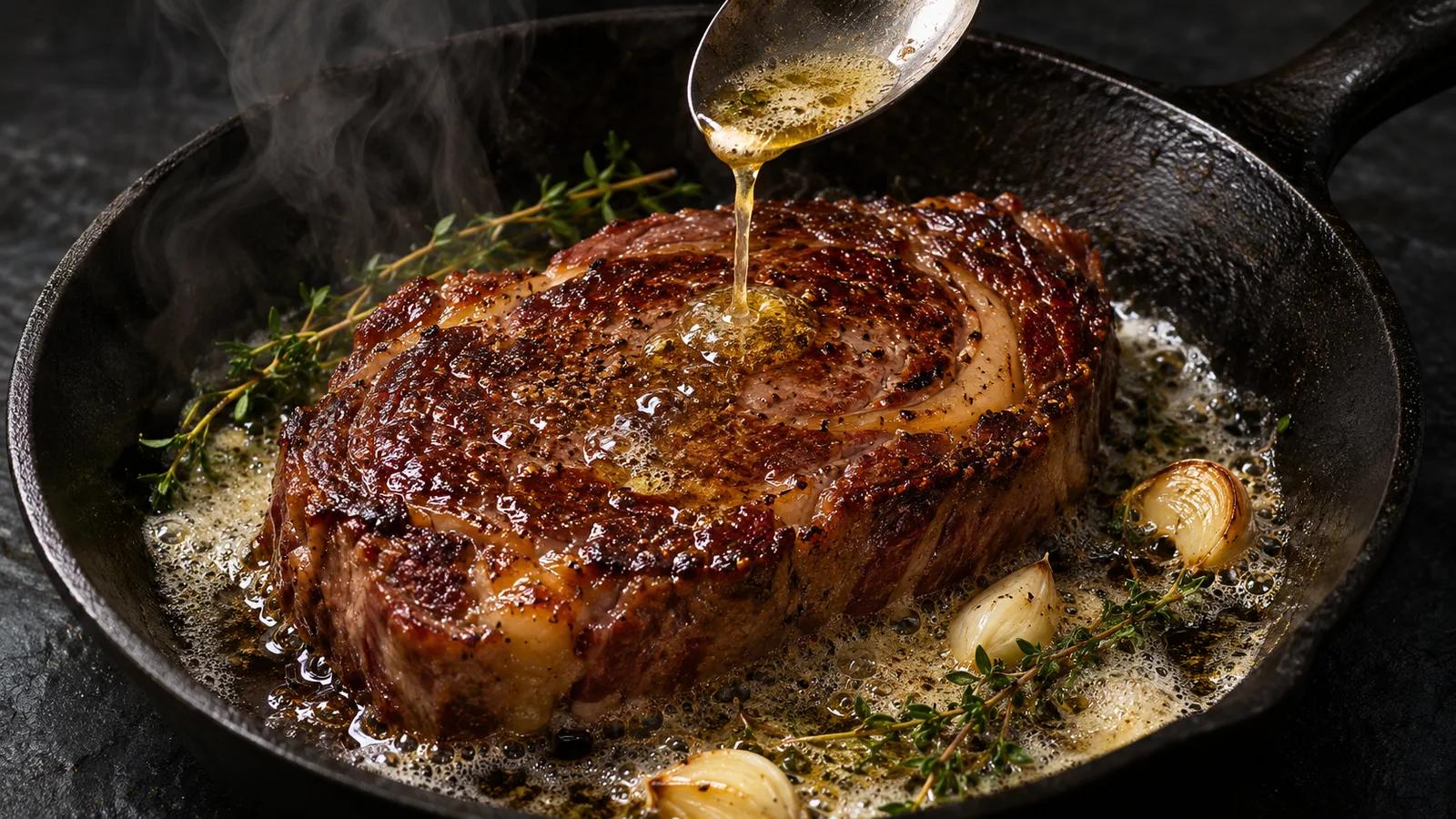
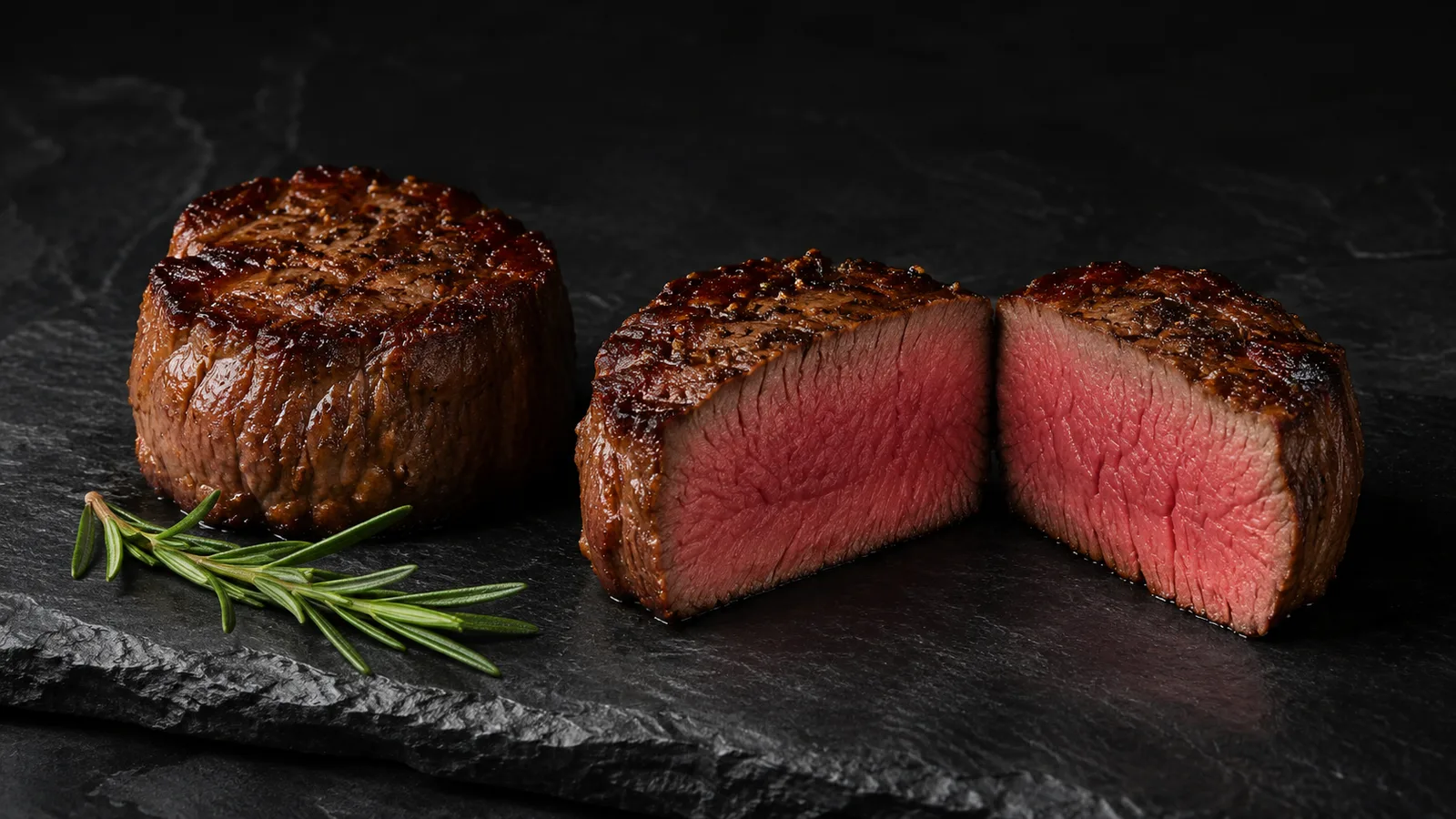
| Fillet | Rare to medium-rare | Very lean; butter-baste and colour the edges | How to cook fillet steak |
| Sirloin | Medium-rare to medium | Snip and render the fat strip; tightens above 60°C | How to cook sirloin steak |
| Ribeye | Medium-rare to medium | Rare can leave the fat waxy; render the edge | How to cook ribeye steak |
| Tomahawk | Medium-rare to medium | Reverse sear; probe the eye, not near the bone | How to cook tomahawk steak |
| Picanha | Medium-rare to medium | Render the fat cap for 4 to 5 minutes first | What is picanha? |
| Flank | Medium-rare, no further than medium | Very high heat, 3 to 4 minutes a side; slice thinly across the grain | Cuts of beef |
| Wagyu | Medium-rare; off at 52–55°C | No oil, short very hot sear, pour off the fat | What is Wagyu? |
If you like your steak well done, pick a well-marbled ribeye over a fillet or sirloin; it stays juicy at a temperature that dries the leaner cuts out. Our ribeye vs sirloin guide explains why, and cuts of beef shows where each steak sits on the animal.
Slicing
Cut across the lines of the muscle fibres, not along them. It shortens every fibre you bite through, and a medium-rare sirloin sliced across the grain eats noticeably more tender than the same steak cut the other way. For flank and picanha, where the fibres are long and obvious, it makes even more difference: slice them thin. Pour the resting juices back over before serving.
Step by step
Take the chill off
Take the steak out of the fridge 20 to 30 minutes before cooking and pat it completely dry with kitchen paper.
Salt it
Salt both sides generously, either just before it goes in the pan or at least 45 minutes ahead, left uncovered in the fridge.
Heat the pan
Heat a cast-iron or heavy-based pan over a high heat for 4 to 5 minutes, until it smokes. Add a thin film of rapeseed or groundnut oil.
Render the fat edge
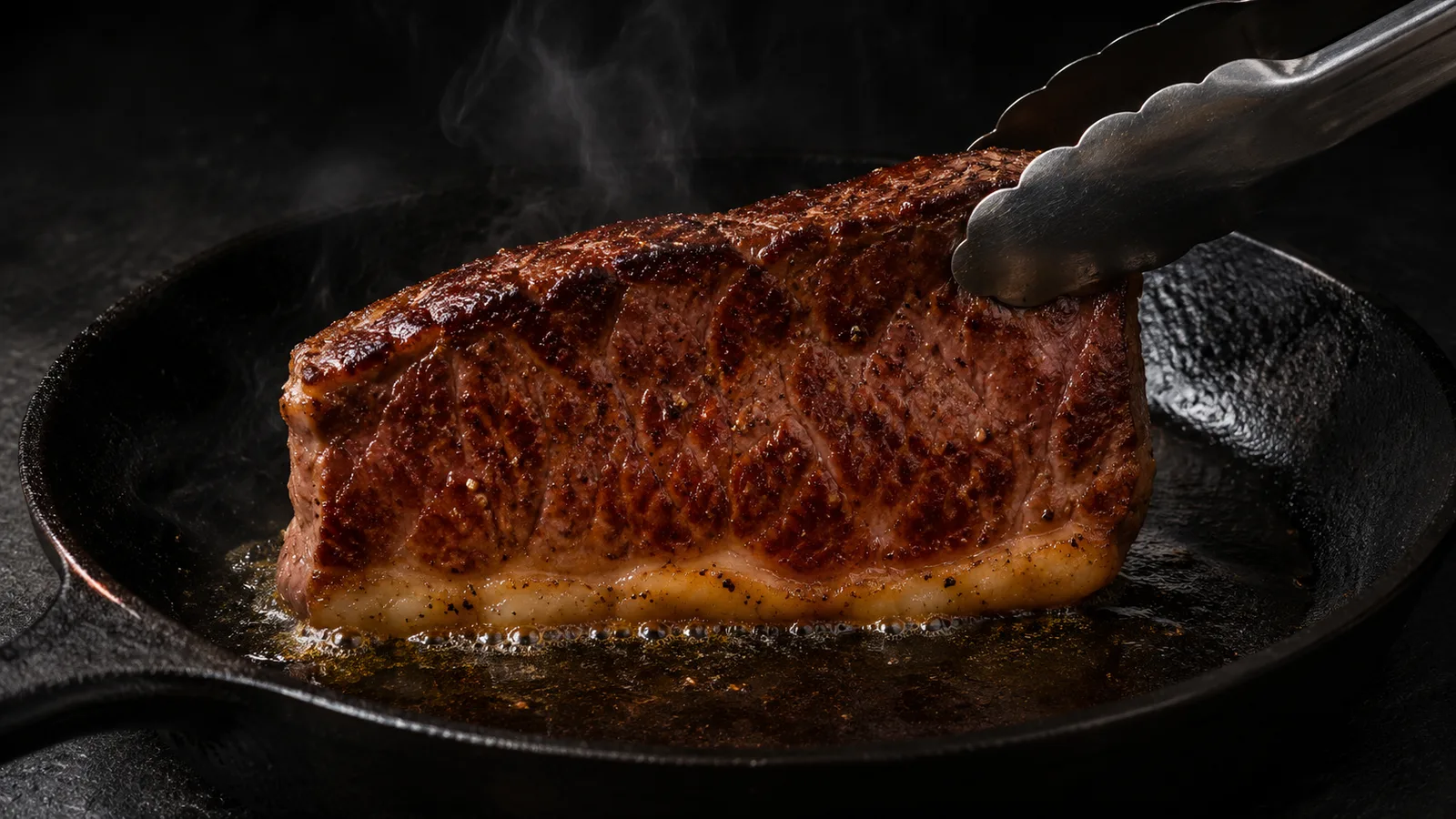
If the steak has a strip of fat, stand it on that edge with tongs for 1 to 2 minutes until golden.
Sear to time
Lay the steak flat and cook it for the time in the chart for its thickness and your doneness. A 2.5cm steak needs 2½ to 3 minutes a side for medium-rare.
Check the core temperature
Push a probe thermometer into the centre of the thickest part from the side. Take it off at 48°C for rare, 52°C for medium-rare or 57°C for medium.
Rest and slice
Rest the steak for about 5 minutes on a warm plate or rack, then slice across the grain and pour the resting juices over.
Questions and answers
How long do you cook a steak for medium-rare?
In a smoking-hot pan, about 1½ minutes a side for a 1.5cm steak, 2½ to 3 minutes a side for a 2.5cm steak, and 4½ to 5 minutes a side for a 4cm steak, turning it every minute or so. Take it off when the centre reads 52°C and rest it; it will settle at about 55°C.
What temperature should a steak be inside?
Measured in the centre after resting: below 45°C for blue, about 50°C for rare, 55°C for medium-rare, 60°C for medium, 65°C for medium-well and 70°C or more for well done. Take it off the heat 2 to 4 degrees below your target, because it keeps cooking as it rests.
What is a blue steak?
A steak seared hard on the outside for about a minute a side and taken off while the centre is still dark red and only just warm, below about 45°C. The Food Standards Agency's guidance is that whole cuts of beef such as steaks can be served pink or rare as long as the outside has been properly cooked. That does not apply to minced beef or burgers, which should be cooked through.
How long should you rest a steak?
About 5 minutes for a normal 2.5 to 3cm steak, 2 to 3 minutes for a thin one, and 5 to 8 minutes for a 4cm steak cooked in a pan. Rest it on a warm plate or a rack, uncovered or under loosely laid foil, so the crust stays crisp.
How do you cook a steak well done without it going tough?
Sear it hard for 2 minutes a side, then turn the heat down to medium and keep turning it until the centre reads 68°C: about 5 minutes a side in total for a 2.5cm steak. Choose a well-marbled cut such as ribeye, which stays juicier at that temperature than lean fillet or sirloin.