On this page
A cow is not one meat. It is dozens of muscles, and each one eats differently depending on how hard it worked. Muscles that do little, high along the back, are tender and suit a hot pan. Muscles that carry the animal or move it, in the shoulders, legs and belly, are full of flavour and connective tissue. They need either a fast, fierce sear and thin slicing, or hours of slow cooking.
Tap a section of the cow to see where each cut sits.
Showing Fore rib
Fore rib
Ribeye · Tomahawk · Côte de boeuf · Rib roast
- How it eats
- The eye muscle and its cap. Well marbled, so it stays juicy and rich.
- How to cook it
- Hot and fast: sear in a smoking pan or over coals, then rest. Thick tomahawks: sear, then finish in the oven.
Shop this cut


Butchers break the carcass into primals, the big wholesale sections, then cut those down into steaks and joints. Here is each one, front to back, using British names.
The forequarter
Chuck and blade
The shoulder. It works hard all day, so most of it is braising and mince meat: rich, beefy and full of collagen that melts into gelatine after two or three hours at a low heat. Two steaks hide in here for butchers who know where to look. Flat iron is the top blade muscle split along the tough sinew that runs through its middle, leaving two well-marbled, tender pieces. Denver comes from under the shoulder blade: well marbled, with a little more chew than ribeye. Both want a hot pan and medium-rare at most.
Fore rib
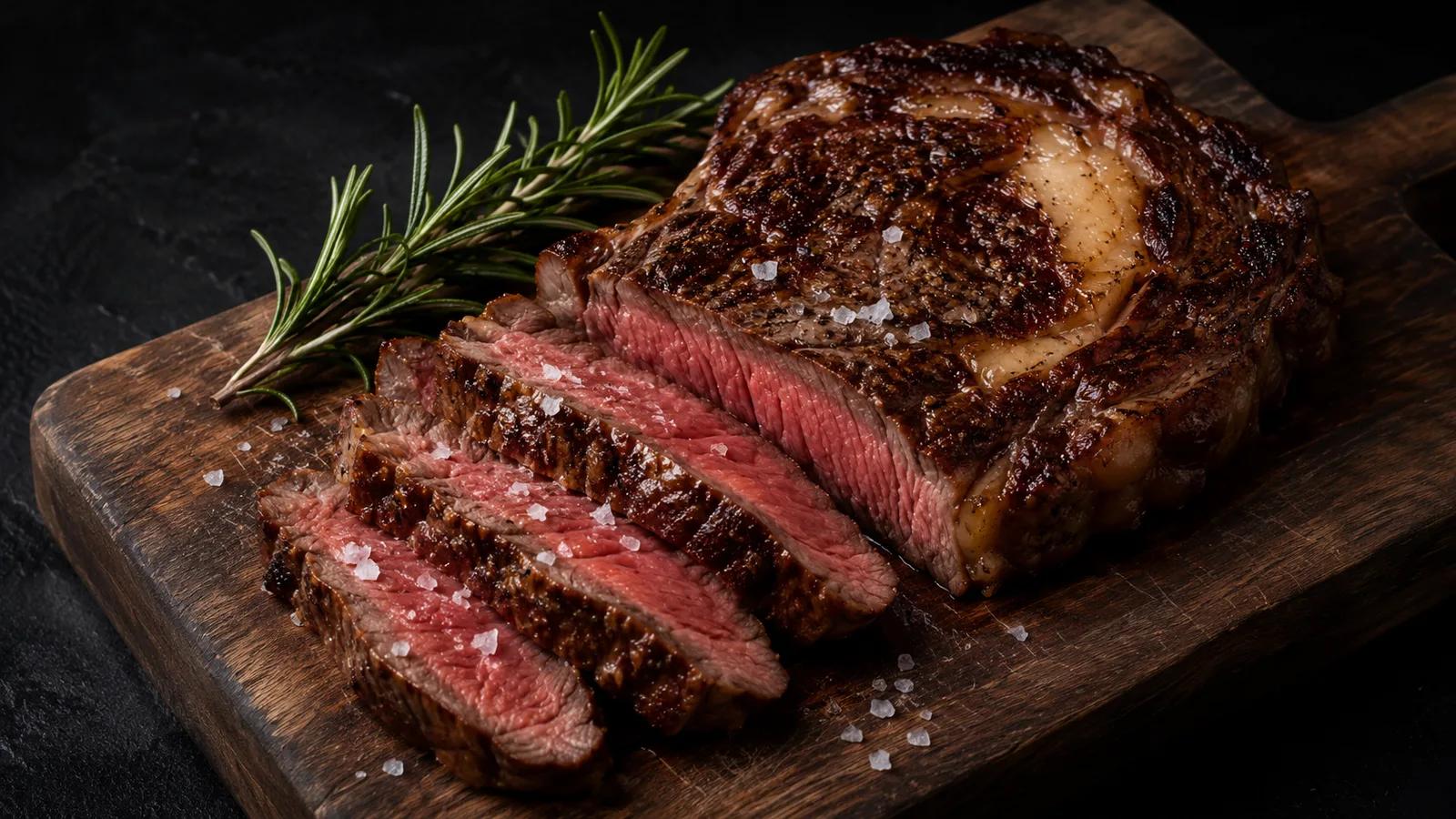
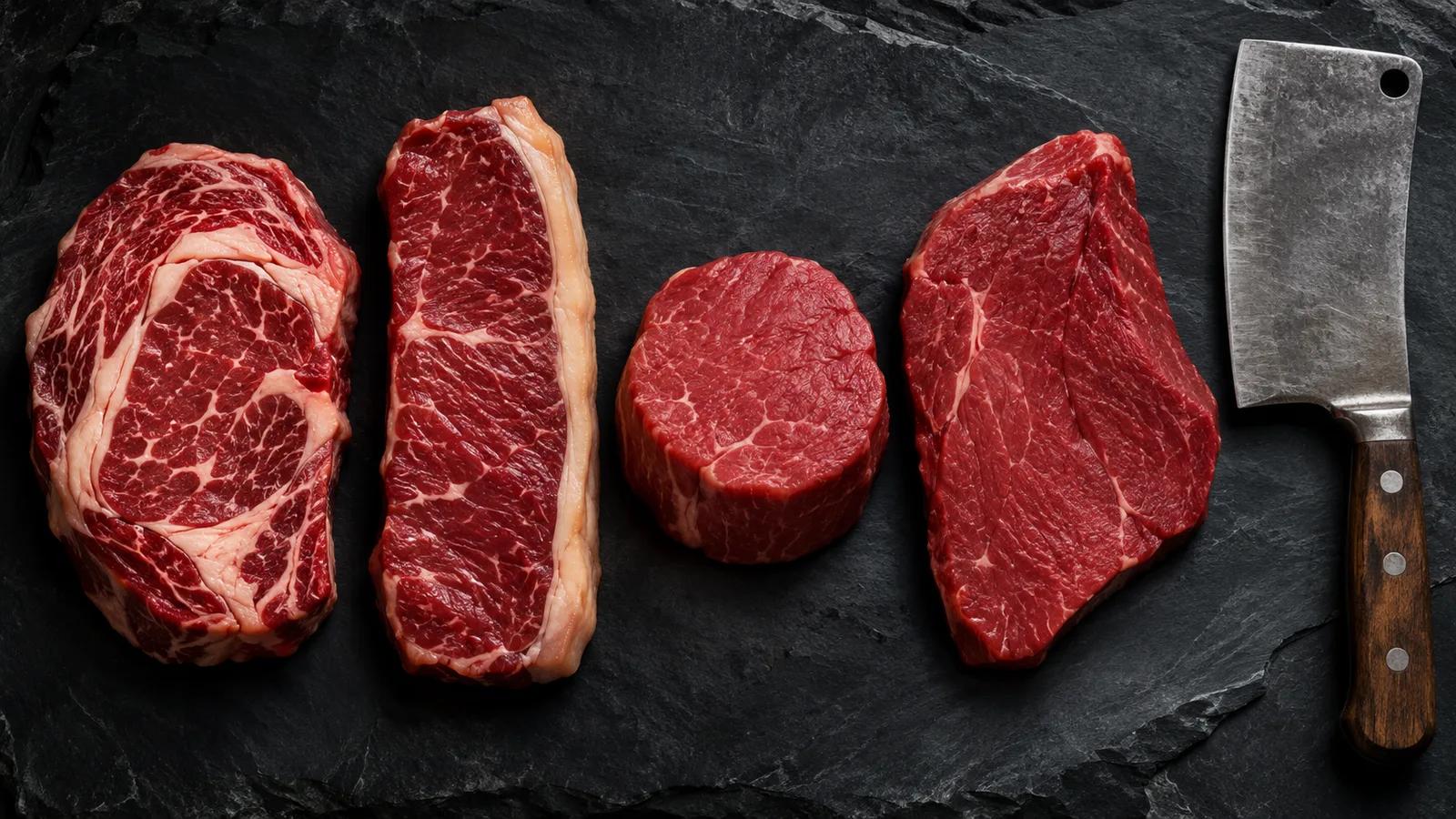
This is where the ribeye comes from: the flavour lover's steak. A ribeye is mostly the longissimus, the long muscle along the back, with the cap (spinalis) curled around it and a seam of fat between the two. That fat, plus the marbling threaded through the meat, melts as it cooks and bastes the steak from the inside. Rich, juicy and forgiving.
Leave the rib bone on and you have a bone-in ribeye, or côte de boeuf when it is cut thick enough for two. Leave a long length of bone on and clean it back, and you have a tomahawk: the British trade spec from the industry body AHDB leaves about 200mm of bone exposed. It is the same eye of meat, just thicker and built for sharing.
The cap is the cook's reward. Cut it off a whole rib and cook it on its own if you ever get the chance.
Brisket and shin
The chest and the lower legs. Neither makes a steak. Brisket is the smoker's and slow-roaster's joint; shin is the braiser's, with enough collagen to give a stew real body.
The hindquarter
Sirloin and fillet (the loin)
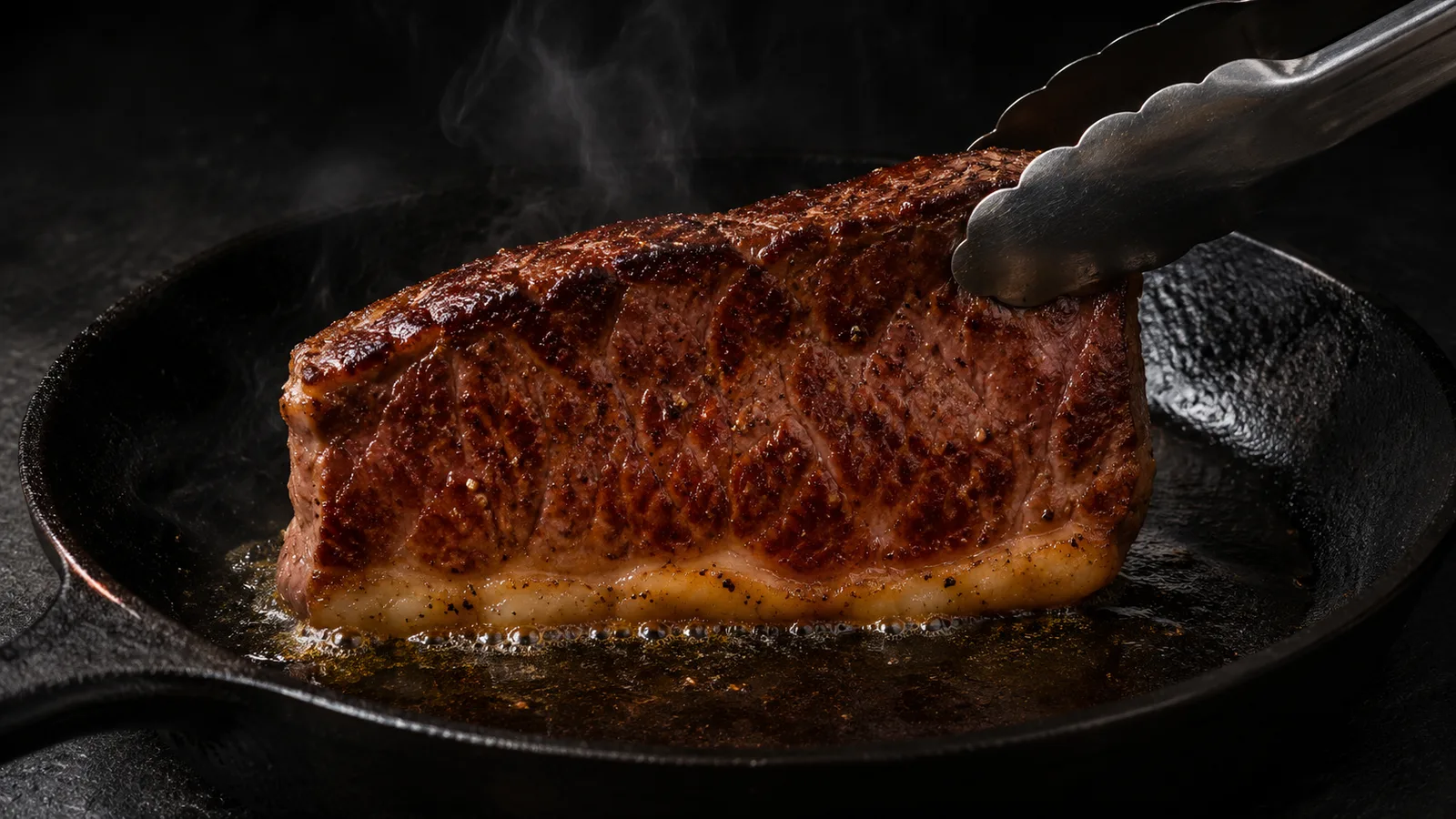
Behind the ribs, the same longissimus muscle runs on into the loin, and here it is called sirloin. It is leaner than ribeye, with a band of fat along one edge, a firmer grain and a clean, beefy taste. Render that fat strip for a minute by holding the steak on its edge in the pan.
Underneath the backbone sits the fillet, the psoas major. It barely moves, so it is the most tender muscle on the animal and one of the leanest. The trade-off is a milder flavour, which is why fillet loves butter, a sauce or a crust. The thick centre, cut for two, is chateaubriand.
 Aberdeen Angus Fillet SteakFrom £20.00
Cut straight across the loin, bone and all, and you get both muscles in one steak: a T-bone, or a porterhouse if it comes from the rear end where the fillet is wider.
Rump
The rump sits between the loin and the leg. It is a group of muscles that work harder than the sirloin, so rump steak has more chew and more flavour. It is the steak for people who like their beef to taste of beef.
Over the top of it sits the rump cap: a triangular muscle with a thick layer of fat on top, which Brazilians call picanha. Skewered and grilled over charcoal, it is a favourite at a Brazilian churrasco. At home, score the fat, salt it well, start it fat-side down to render, then sear the meat side.
Flank and plate
The belly. The muscles here have long, coarse fibres and a deep, almost mineral beefiness. Flank is the abdominal wall below the loin; the French call the steaks from this area bavette. Onglet, or hanger, hangs from the diaphragm, and there is only one per animal. All three follow the same rules: marinate if you like, cook very hot and fast, stop at medium-rare or medium, rest, then slice thinly across the grain. Slicing across the grain cuts those long fibres short, and that is what turns a chewy steak into a tender one. Ideal for tacos, fajitas and steak salads.
Topside, silverside and thick flank
The back leg. Lean, hard-working and low in marbling. These are roasting and pot-roasting joints rather than steak cuts: topside for a Sunday roast served pink, silverside for salt beef and slow pot roasts. Cut thin and flashed in a pan, topside also makes a decent minute steak.
Steak cuts compared
Price bands are relative, from £ (everyday value) to ££££ (special occasion), and compare cuts at a similar quality level. Breed, feeding and grade move a cut up or down. A grain-fed Black Angus ribeye costs more than a grass-fed one, and wagyu or USDA Prime sits above both.
| Cut | Primal | Tenderness | Flavour | Fat | How to cook | Price band |
|---|---|---|---|---|---|---|
| Fillet | Loin (under the backbone) | Very high | Mild | Very low | Hot sear and baste, or sear then roast whole | ££££ |
| Ribeye | Fore rib | High | Rich, buttery | High, marbled | Hot pan or grill, render the fat | £££ |
| Tomahawk | Fore rib, long bone | High | Rich | High | Reverse sear, or indirect grill then sear | £££ |
| Sirloin | Loin | Medium-high | Clean, beefy | Moderate, fat strip | Hot pan, render the fat edge | ££ |
| T-bone / porterhouse | Loin, sirloin plus fillet | High | Beefy | Moderate | Grill or pan, then finish in the oven | £££ |
| Rump | Rump | Medium | Strong, beefy | Low to moderate | Hot pan or grill, rest well | £ |
| Picanha (rump cap) | Rump | Medium | Strong, beefy | High fat cap | Render fat side first, or skewer over charcoal | £ |
| Flat iron | Chuck and blade | Medium-high | Rich | Moderate, marbled | Very hot pan, no further than medium | £ |
| Flank / bavette | Flank | Low to medium | Deep, beefy | Low | Very hot and fast, slice across the grain | £ |
| Onglet (hanger) | Plate, diaphragm | Medium | Intense, slightly mineral | Low | Very hot and fast, keep it rare to medium-rare | £ |
Which is the best cut of steak for you?
There is no single answer. Start with what you want on the plate.
- Tenderness first: fillet steak. Sear it hard, baste it with butter and take it no further than medium-rare. Our fillet cooking guide has the pan method and the whole-piece roast.
- Flavour and juice: ribeye steak. See how to cook ribeye.
- A bit of both: sirloin steak, the all-rounder. See how to cook sirloin, and if you are torn, read ribeye vs sirloin.
- Big flavour, small price: the hard-working cuts, such as picanha for the grill (what is picanha?) or flank for tacos and fajitas. Cook them hot and slice them thinly across the grain.
- Feeding a table: a tomahawk, carved at the board. Read how to cook a tomahawk first; it is too thick for a pan alone.
- The rare treats: USDA Prime sirloin, graded Prime, the most marbled and the scarcest grade in the American system, or a wagyu ribeye at MS8–9. With wagyu, cook small portions in a very hot, dry pan and let its own fat do the work. More in what is wagyu?
- Can't decide: cook a ribeye and a sirloin on the same night, slice them and share. Our steak cooking times chart keeps both on track.
 Aberdeen Angus Ribeye SteakFrom £14.00
Cooking any steak: the basics
Our steaks are halal and hand-cut in-house in Wolverhampton, but it is the cut that decides how you cook it. A few rules hold for all of them:
- Take it out of the fridge 30 minutes before cooking, and pat it dry. A wet steak steams instead of searing.
- Salt well just before it goes in the pan, or at least 45 minutes ahead. Anything in between draws moisture to the surface.
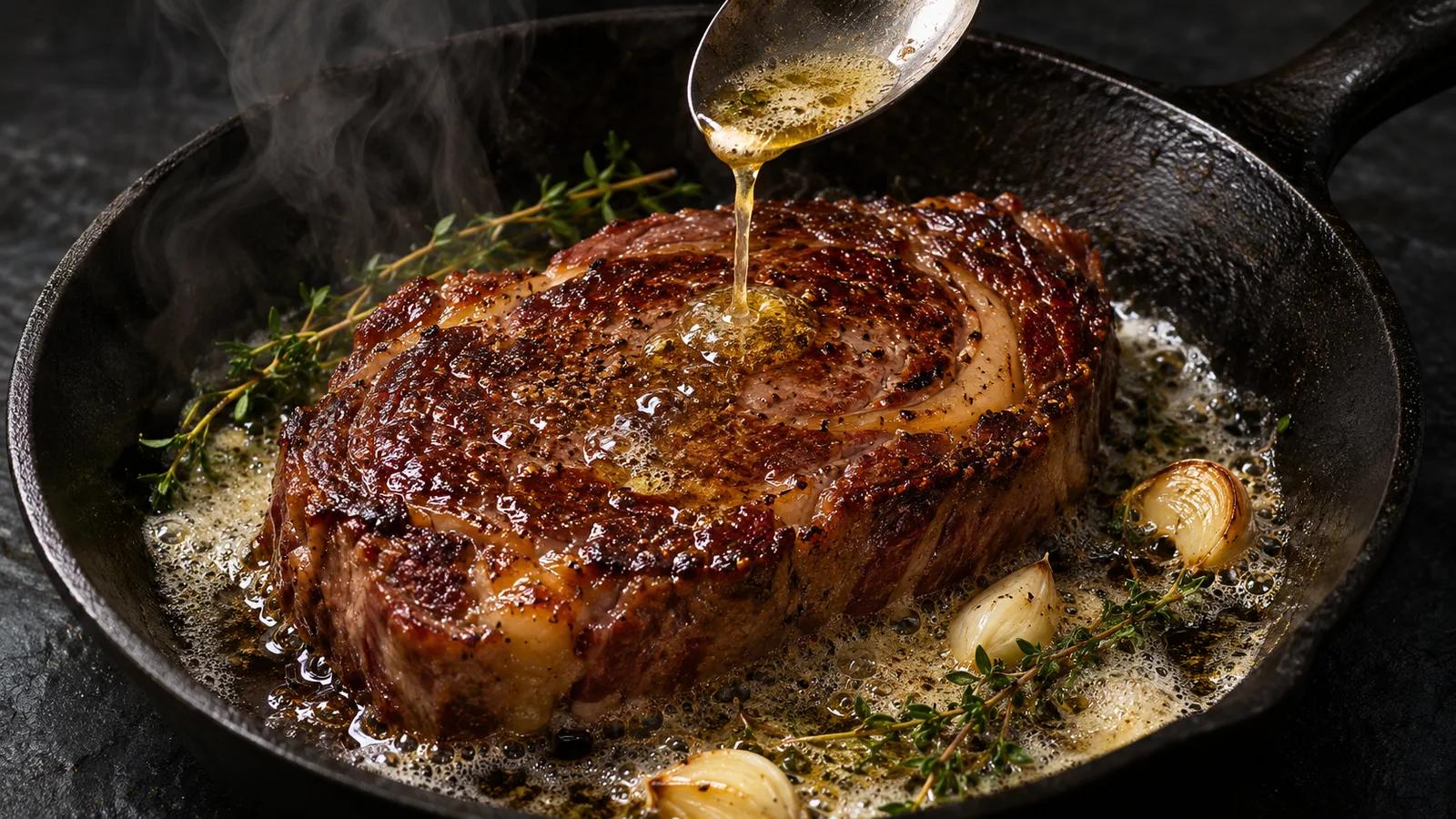
- Get the pan very hot. For a 2.5cm steak, 2–3 minutes a side gives medium-rare.
- Use a probe thermometer on anything thick. Take the steak off at about 52°C for medium-rare; it climbs to around 55°C as it rests. For medium, take it off at about 57°C and it settles near 60°C. Our steak cooking times guide has the full chart.
- Rest it for 5 minutes, or 10 minutes for a whole fillet or a tomahawk.
- Slice across the grain on flank, onglet, bavette and picanha. It matters less on fillet and ribeye, but it never hurts.
Questions and answers
What is the best cut of steak?
There is no single best cut; it depends on what you want from the steak. Fillet is the most tender but mild and lean. Ribeye carries more marbling than the other prime steaks, so it eats richest and juiciest. Sirloin sits between the two. Rump, picanha and flank give the most beef flavour for the money if you cook them hot and slice them against the grain.
What is the most tender cut of beef?
The fillet. It comes from the psoas major, a muscle tucked under the backbone that does almost no work, so it has very little connective tissue. That is why fillet steak and chateaubriand cut like butter, and why fillet usually costs the most per kilo of the everyday cuts.
What is the difference between ribeye and sirloin?
Both are cut from the same long muscle along the back. Ribeye comes from the fore rib, further forward, so it carries more marbling and a pocket of fat around the cap. Sirloin comes from further back in the loin. It is leaner, with a strip of fat down one side, and a firmer, cleaner bite.
Which steak cuts are cheapest?
The hard-working muscles: rump, picanha (rump cap), flank, onglet, flat iron and bavette. They have more chew than fillet or ribeye but more beef flavour. Cook them quickly over a high heat, no further than medium, and slice thinly across the grain.
What is the difference between a T-bone and a porterhouse?
Both are sirloin and fillet cut together on the bone, divided by the T-shaped bone. A porterhouse is cut from the rear of the loin, where the fillet is wider, so it carries a bigger piece of fillet than a T-bone.