On this page
Ribeye is the flavour lover's steak. It is cut from the fore rib, just behind the shoulder, and it is really two muscles in one: the eye, which is the long muscle that runs along the back, and the cap curled around it, with a seam of fat between the two. Add the marbling threaded through the meat and you have the richest of the prime steaks. Cooking ribeye well is mostly about that fat: get it hot enough to melt, and the steak bastes itself from the inside.
Before you start
- Take the chill off. Out of the fridge 30 minutes before cooking. A fridge-cold centre means the outside overcooks while you wait for the middle.
- Dry it. Pat it completely dry with kitchen paper. A wet surface steams; a dry one browns.
- Salt it at the right time. Generously, either just before it goes in the pan or at least 45 minutes ahead, uncovered in the fridge. Avoid the window in between: the salt has drawn moisture to the surface but not yet soaked back in, so the steak goes in wet. For the deepest crust, salt it the night before and leave it on a rack in the fridge.
- Use a probe thermometer. Times get you close; the thermometer tells you when it is done.
Why cast iron
Ribeye has a lot of fat to render and a big surface to brown, so you want a pan that holds its heat when cold meat lands in it. Cast iron is built for exactly that. Heat it over a high heat for 4 to 5 minutes, until a drop of water skitters across it and the oil just starts to smoke. A thick stainless steel pan also works. Non-stick will not take this heat.
How to cook ribeye steak in a pan
- Oil the pan lightly. A thin film of rapeseed, groundnut or sunflower oil. Not extra virgin olive oil, which burns at this heat. With a heavily marbled steak you can skip it.
- Render the fat edge first. Pick the steak up with tongs and stand it on its fat edge for 1 to 2 minutes, until the fat turns golden and crisp. This is the step most people skip, and it is the difference between chewy white fat and fat worth eating. It also fills the pan with beef fat to sear in.
- Sear the faces. Lay it down flat, away from you. Cook it for the time in the table below and turn it once, or turn it every minute for slightly more even cooking.
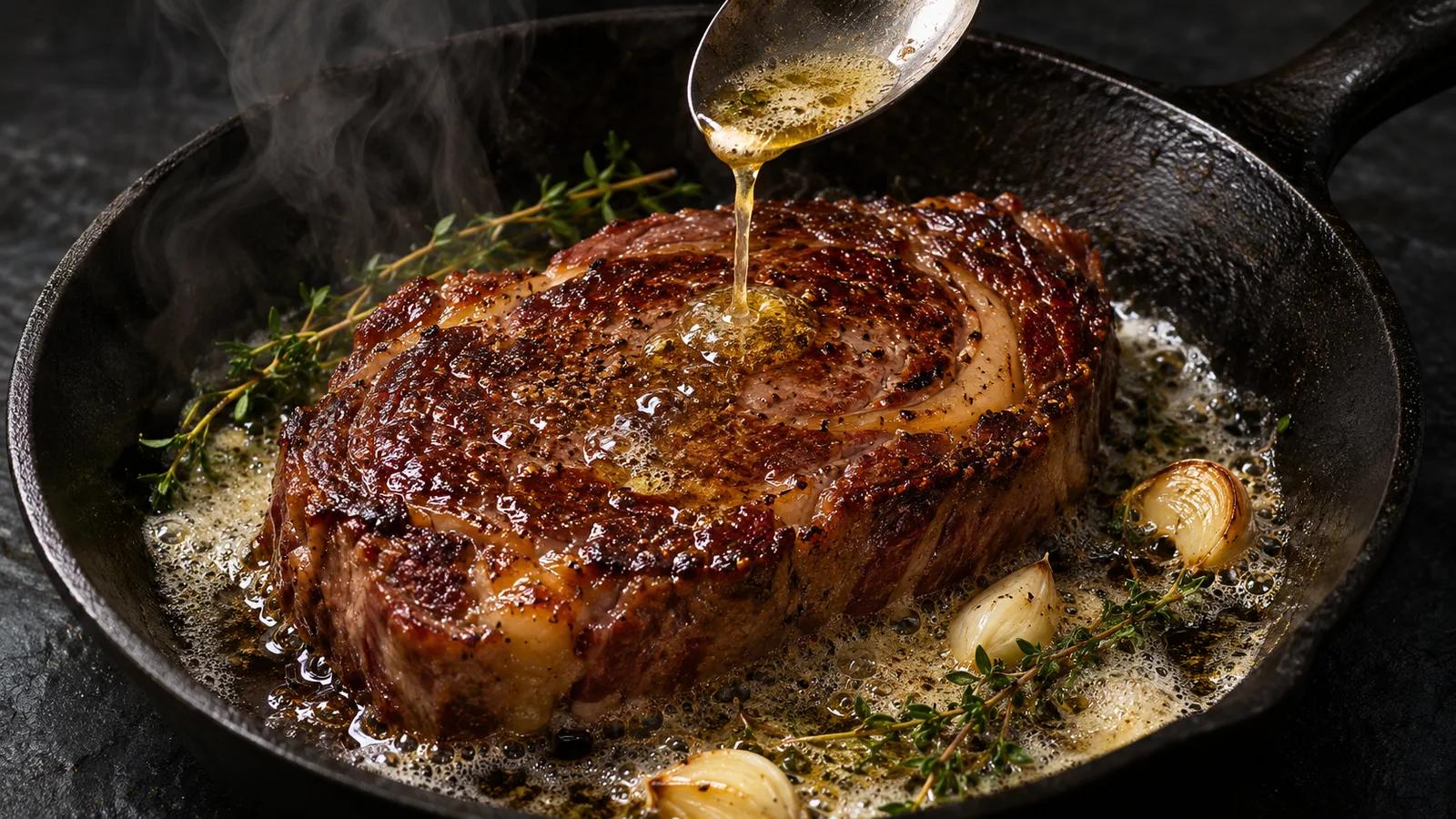
- Baste. For the last minute, turn the heat to medium and add a knob of butter, a crushed garlic clove and a sprig of thyme or rosemary. Tilt the pan and spoon the foaming butter over the steak.
- Check the centre with your probe, from the side into the thickest part, and take it off a few degrees short of your target.
- Rest it for 5 minutes on a warm plate or a rack. Do not wrap it; lay foil loosely over it if you must.
One or two ribeyes in a 28cm pan is the limit. Any more and the pan cools and the steaks stew.
Ribeye steak cooking times
Our ribeyes are hand-cut at 250 to 300g, which is usually 2.5 to 3cm thick. Times are per side in a smoking-hot pan, after rendering the fat, for a steak that has been out of the fridge for 30 minutes.
| Thickness | Rare | Medium-rare | Medium | Medium-well | Well done |
|---|---|---|---|---|---|
| 2cm | 1½ min | 2 min | 2½ min | 3 min | 4 min |
| 2.5cm | 2 min | 2½–3 min | 3½ min | 4 min | 5 min |
| 3cm | 2½ min | 3–3½ min | 4 min | 5 min | 6 min |
4cm or thicker? A pan alone will burn the outside before the middle is ready. Use the reverse sear below.
Treat the times as a starting point and let the thermometer decide. For medium-well or well done, turn the heat down to medium after 2 minutes a side so the crust does not burn before the centre is cooked.
Core temperatures for ribeye
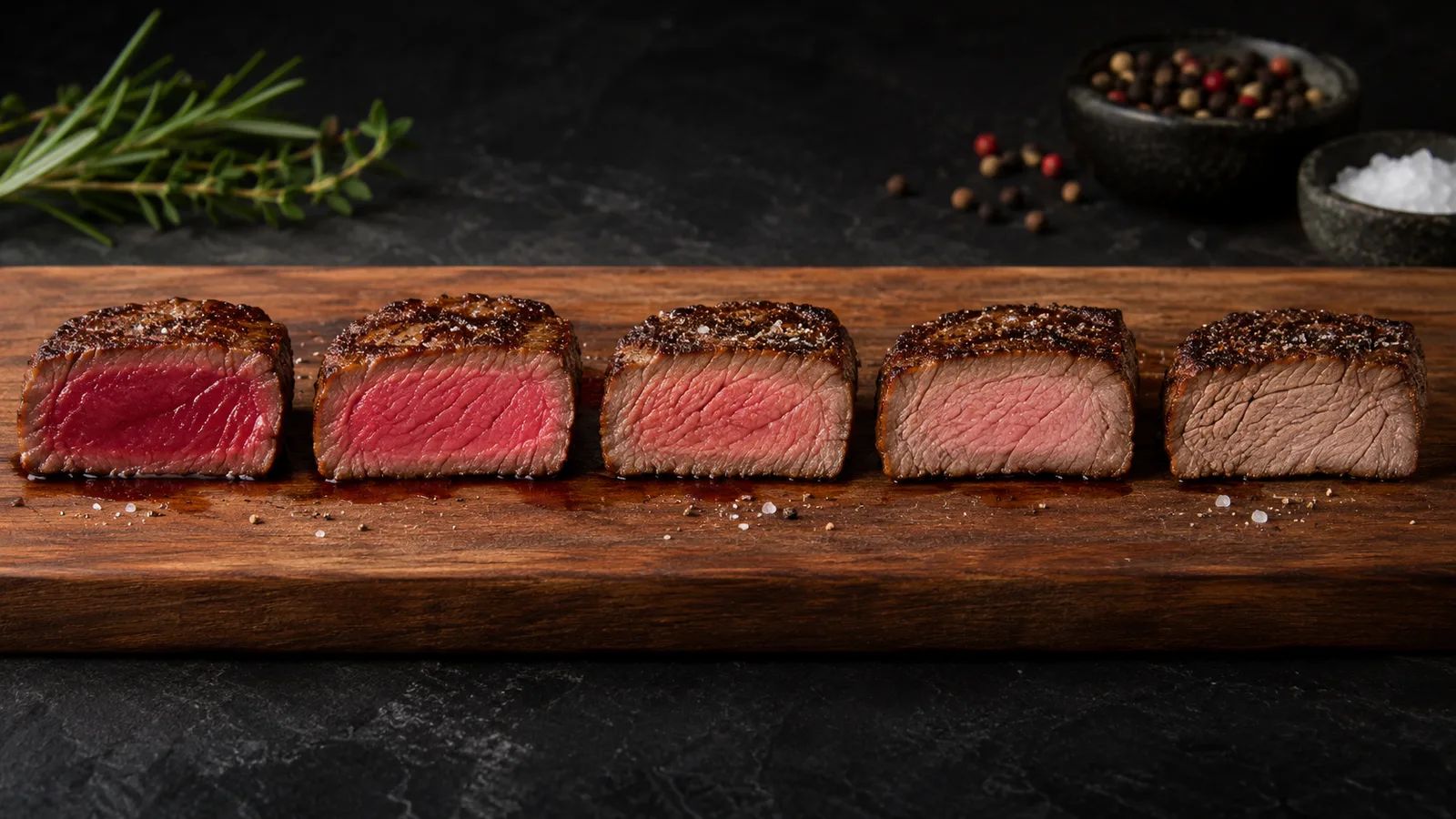
| Doneness | Take it off the heat at | After resting |
|---|---|---|
| Rare | 48°C | about 50°C |
| Medium-rare | 52°C | about 55°C |
| Medium | 57°C | about 60°C |
| Medium-well | 62°C | about 65°C |
| Well done | 68°C | 70°C and above |
We cook ribeye medium-rare to medium. Rare is fine for fillet, but in a ribeye it can leave the fat around the cap waxy and the marbling unmelted. Medium is where ribeye earns its reputation: it stays juicy at a temperature that dries out a fillet. For every cut on one page, see steak cooking times.
The Food Standards Agency's guidance is that whole cuts of beef such as steaks can be served pink or rare, as long as the outside has been properly cooked.
The reverse sear, for thick ribeyes
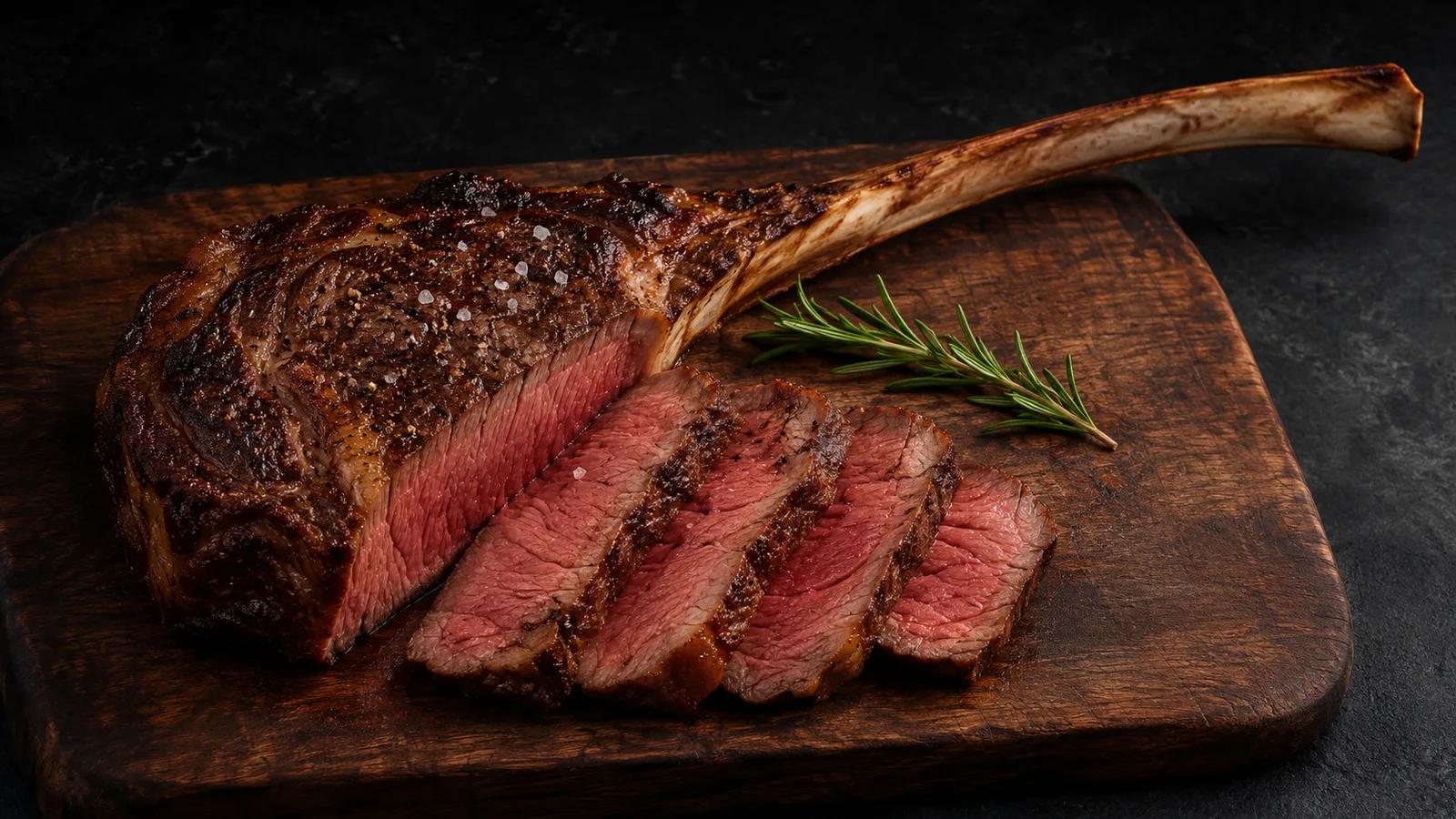
A pan cooks from the outside in, which is fine up to about 3.5cm. Beyond that, by the time the centre is medium-rare, a thick band under the crust has gone grey. The reverse sear flips the order: cook gently first, sear last. It suits a thick bone-in rib or a tomahawk.
- Salt it ahead, ideally the night before, and set it on a wire rack over a tray.
- Cook it low. Into an oven at 120°C (100°C fan) until the centre reads 46°C for medium-rare or 51°C for medium. Depending on thickness and weight, that is 30 to 60 minutes, so go by the probe, not the clock.
- Sear it hard. Get your cast-iron pan smoking, render the fat edge for a minute, then sear each face for about a minute, basting with butter at the end.
- Rest briefly. Two or three minutes is enough, because the slow start means far less heat is stored under the crust.
The result is pink from edge to edge with a thin, dark crust. There is more on cooking a big bone-in rib in our tomahawk guide.
Slicing and serving
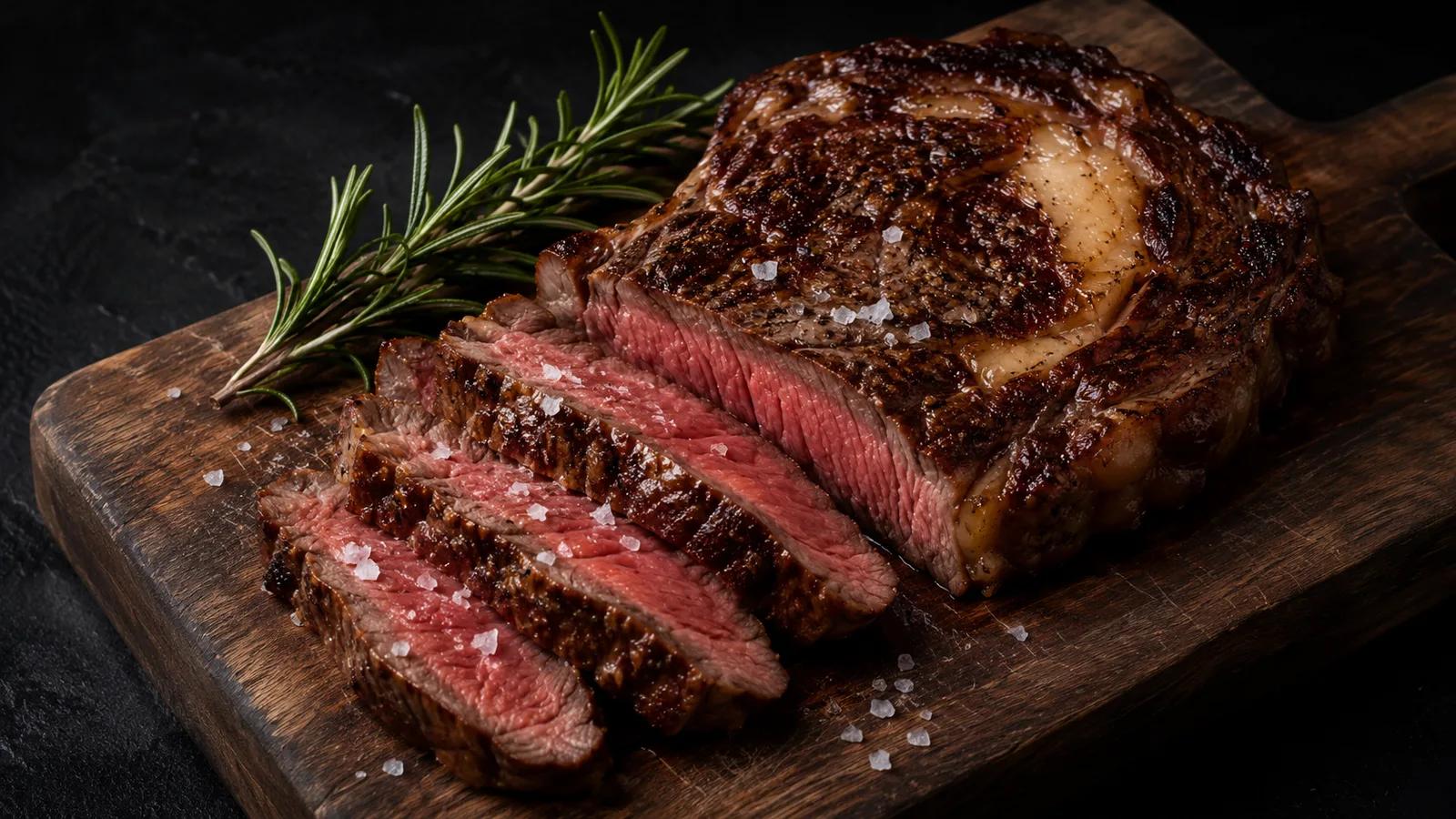
Slice across the lines of the muscle fibres into strips about 1cm wide, so everyone gets a piece of the cap, the curl of meat around the outside and the most tender bite on the steak. Finish with flaky salt and the resting juices.
Ribeye is rich, so serve something sharp with it: chimichurri, salsa verde, peppercorn sauce or a dressed watercress salad.
On the barbecue
All that fat drips and flares. Bank the hot coals on one side and leave the other empty. Sear over the coals, fat edge first, and move the steak to the cool side if flames lick up. Thick steaks can finish on the cool side with the lid on: the reverse sear, outdoors.
Choosing your ribeye
Our ribeye steak is hand-cut by us in Wolverhampton at 250 to 300g. Render the fat edge first and cook it to medium-rare or medium, so the marbling melts.
 Aberdeen Angus Ribeye SteakFrom £14.00
For a real occasion, our Wagyu ribeye has a marble score of 8 to 9. With that much fat it needs no oil and only a short, very hot sear; what is Wagyu? explains the grades.
Torn between cuts? See ribeye vs sirloin or our sirloin guide.
Step by step
Take the chill off and dry it
Take the ribeye out of the fridge 30 minutes before cooking and pat it completely dry with kitchen paper.
Season
Salt the steak well on both sides just before it goes in the pan, or at least 45 minutes ahead and leave it uncovered in the fridge.
Heat a cast-iron pan
Heat a cast-iron or heavy-based pan over a high heat for 4 to 5 minutes, until it is smoking. Add a thin film of rapeseed or groundnut oil.
Render the fat edge
Hold the steak upright with tongs, fat edge down, for 1 to 2 minutes until the fat is golden and has melted into the pan.
Sear both sides
Lay the steak flat. For a 2.5cm ribeye cooked medium-rare, give it 2½ to 3 minutes a side. Add butter, garlic and thyme for the last minute and spoon the butter over.
Check the core temperature
Push a probe thermometer into the thickest part from the side. Take the steak off at 52°C for medium-rare or 57°C for medium.
Rest and slice
Rest the steak on a warm plate or rack for 5 minutes, then slice it across the grain into strips about 1cm wide and pour the resting juices over.
Questions and answers
How long do you cook a ribeye steak for medium-rare?
For a ribeye about 2.5cm thick, render the fat edge for 1 to 2 minutes, then cook it in a smoking-hot pan for 2½ to 3 minutes a side. Take it off when the centre reads 52°C and rest it for 5 minutes; it will settle at about 55°C. A 3cm steak needs 3 to 3½ minutes a side.
Is ribeye better medium-rare or medium?
Medium-rare to medium, so a finished temperature of about 55 to 60°C. Ribeye carries a lot of fat inside the muscle and a seam of fat around the cap, and that fat needs heat to soften. Cooked rare, it can stay waxy and chewy. Ribeye also stays juicy at medium, which leaner cuts such as fillet and sirloin do not.
Do you need oil to cook ribeye steak?
Only a little. Stand the steak on its fat edge first and it renders enough beef fat to sear in. A thin film of rapeseed or groundnut oil just helps the first contact. With a heavily marbled grain-fed ribeye you can skip the oil altogether.
When should you reverse sear a ribeye?
When it is 4cm thick or more, such as a thick bone-in rib or a tomahawk. Cook it slowly in an oven at 120°C (100°C fan) until the centre reaches about 46°C, then sear it in a smoking-hot pan for about a minute a side. For a normal 2.5 to 3cm ribeye, a hot pan alone is quicker and works just as well.
Should you trim the fat off a ribeye before cooking?
No. Leave the fat edge on and render it in the pan until it is golden and crisp. It feeds the pan with beef fat and seasons the steak as it cooks. The fat inside the steak is part of the eating, so cook it to medium-rare or medium and it melts into the meat.