On this page
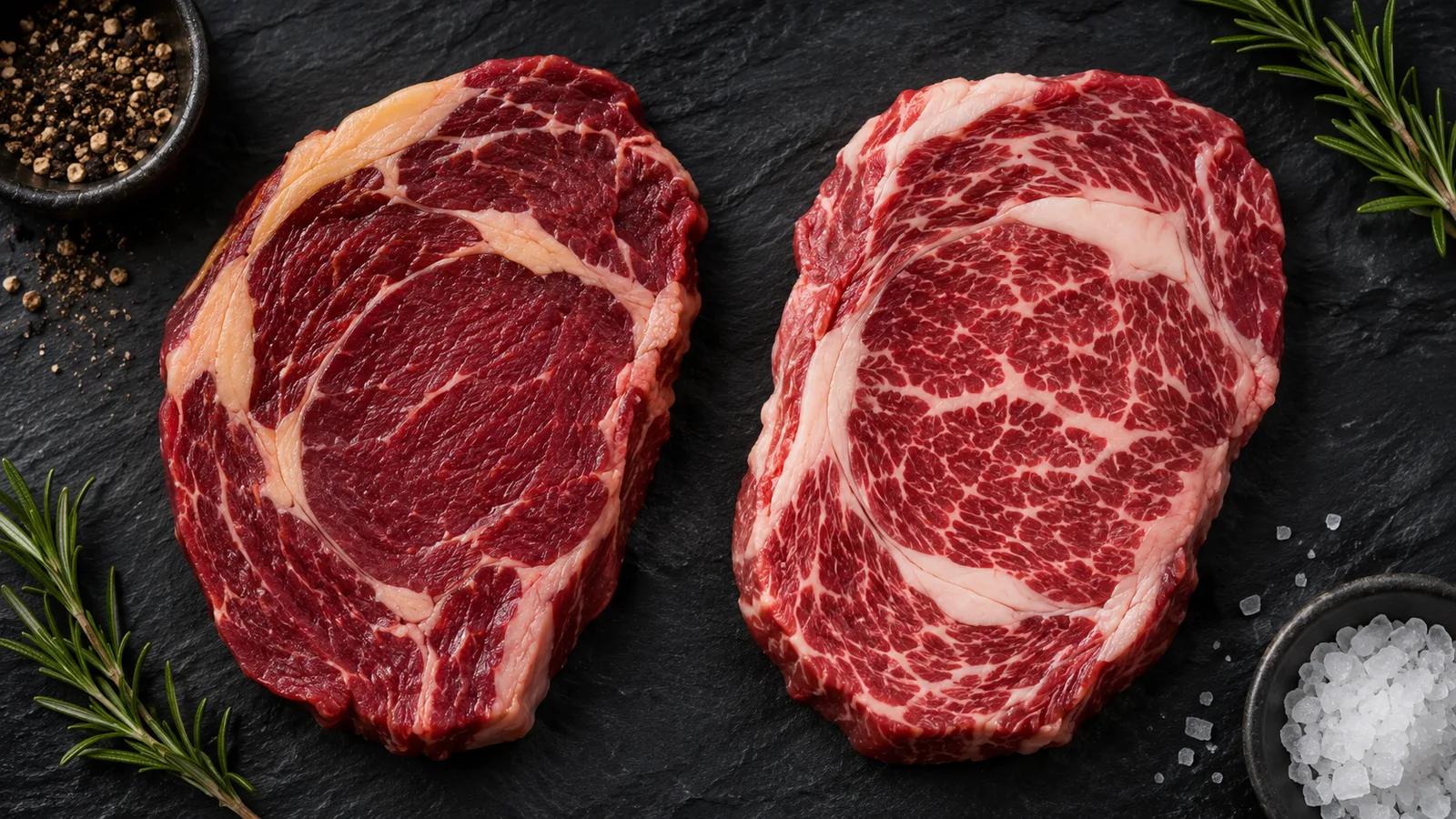
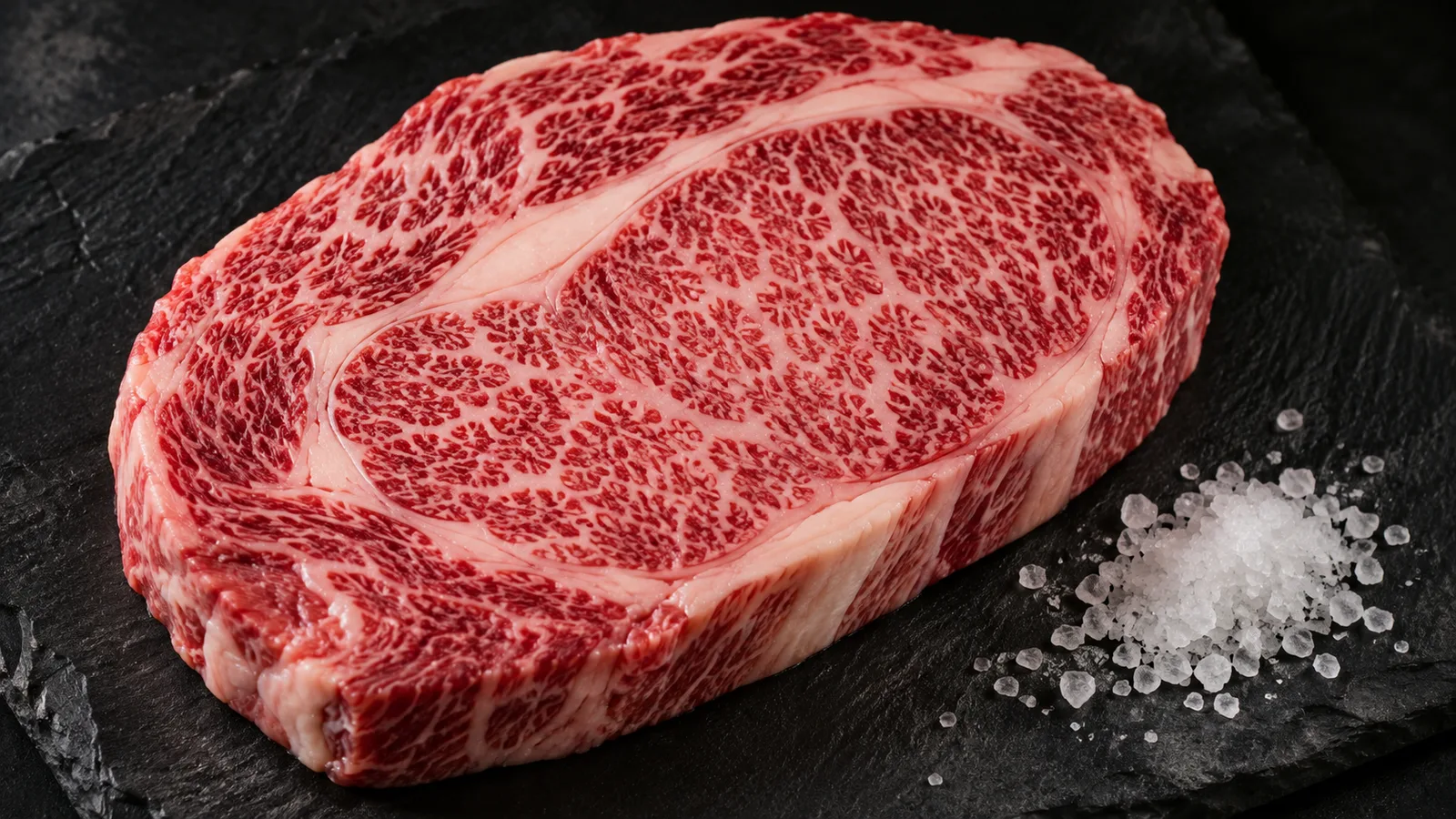
Wagyu beef is beef from Japanese cattle breeds, bred for generations to marble. It is not a cut, a grade or a place. The word simply means "Japanese cattle" (wa is Japan, gyu is cow), and what sets these animals apart is where they put their fat. Most beef cattle store fat around the muscle. Wagyu lay it down inside the muscle, as thousands of fine white threads. That is marbling, and Wagyu carries more of it than almost any other breed.
The result eats very differently from a normal steak. It is soft rather than chewy, the fat melts at a lower temperature than ordinary beef fat, and the flavour is sweet, buttery and rich enough that a small piece goes a long way.
The Wagyu breed: where Wagyu cows come from
There are four Japanese Wagyu breeds:
- Japanese Black (Kuroge Washu): the great majority of Wagyu, and the one with the heaviest marbling. When people say "Wagyu", they nearly always mean this.
- Japanese Brown (Akage Washu, or Akaushi): leaner, with a beefier taste.
- Japanese Shorthorn and Japanese Polled: rare, and seldom seen outside Japan.
A small number of Wagyu cattle left Japan for the United States from the 1970s, and some later reached Australia, before Japan restricted exports of live Wagyu and their genetics in the late 1990s. Those animals are the root of the Wagyu herds raised abroad today. Australia now has the largest Wagyu industry outside Japan.
Outside Japan, much Wagyu is crossed with other breeds, usually Angus. The Australian Wagyu Association uses these terms:
| Label | Wagyu content |
|---|---|
| Fullblood | 100%, no other breed in the pedigree |
| Purebred | At least 93.75% |
| F1 / crossbred | About 50%, typically Wagyu bull over Angus cow |
Kobe beef is one regional brand of Japanese Black Wagyu, from Tajima-line cattle raised in Hyogo prefecture under strict rules. All Kobe is Wagyu. Very little Wagyu is Kobe.
Wagyu grades: A5 and BMS explained
Japan grades every carcass on two things: how much meat it gives, and how good that meat is. Together they make the grade you see on the label, such as A5 or B4.
The letter: yield grade
| Yield grade | Usable meat from the carcass |
|---|---|
| A | At least 72% |
| B | About 69–72% |
| C | Below about 69% |
Yield tells the trade how much saleable meat comes off the animal. It says nothing about how the beef eats.
The number: quality grade
The quality grade runs from 1 to 5. Graders score four things: marbling, meat colour and brightness, firmness and texture, and the colour and lustre of the fat. The final grade is the lowest of the four.
BMS: the marbling score
Marbling is scored on the Beef Marbling Standard (BMS), from 1 to 12. It feeds into the quality grade like this:
| Quality grade | BMS needed |
|---|---|
| 5 | 8–12 |
| 4 | 5–7 |
| 3 | 3–4 |
| 2 | 2 |
| 1 | 1 |
So A5 Wagyu means a high-yielding carcass with a BMS of at least 8 and top marks for colour, texture and fat. A BMS 12 steak looks almost more white than red. An A5 at BMS 8 and one at BMS 12 share a grade but eat quite differently, which is why good sellers state the BMS as well.
Australian marble scores: what "MS" means
Australian beef is graded differently, so do not read an Australian score as if it were Japanese.
- AUS-MEAT marble score: 0 to 9, measuring the amount of marbling. You will often see Wagyu sold as "MS9+" for the top end.
- MSA marbling score: 100 to 1190, which also rates how fine the flecks are and how evenly they spread.
There is no official conversion between the two Australian scales, and none between either of them and the Japanese BMS. The scales overlap but do not line up number for number. Read each against its own system.
Our Wagyu ribeye steak is sold at MS8–9, close to the top of the 0–9 marble score scale. Our other special-occasion steak is the USDA Prime sirloin.
 Wagyu Ribeye Steak MS8 9From £50.00
Why is Wagyu so expensive?
Several things stack up:
- Time on feed. Wagyu put on marbling slowly. Australian long-fed Wagyu commonly spends 300 days or more on grain, where ordinary grain-fed beef might spend around 100. Every extra month costs feed, labour and space.
- Limited supply. Japan's herd is small, and the restrictions on exporting live cattle and genetics mean the herds abroad were built from a small base.
- Grading. Only a fraction of carcasses reach the top grades, and those steaks carry the premium.
- Distance. Much of the Wagyu sold in the UK is imported from Japan or Australia, and shipping chilled beef across the world is not cheap.
Bear in mind that Wagyu is eaten in smaller portions. A 100–150g portion of high-marble Wagyu satisfies like a much bigger normal steak, so the price per plate is less frightening than the price per kilo.
How to cook a Wagyu steak
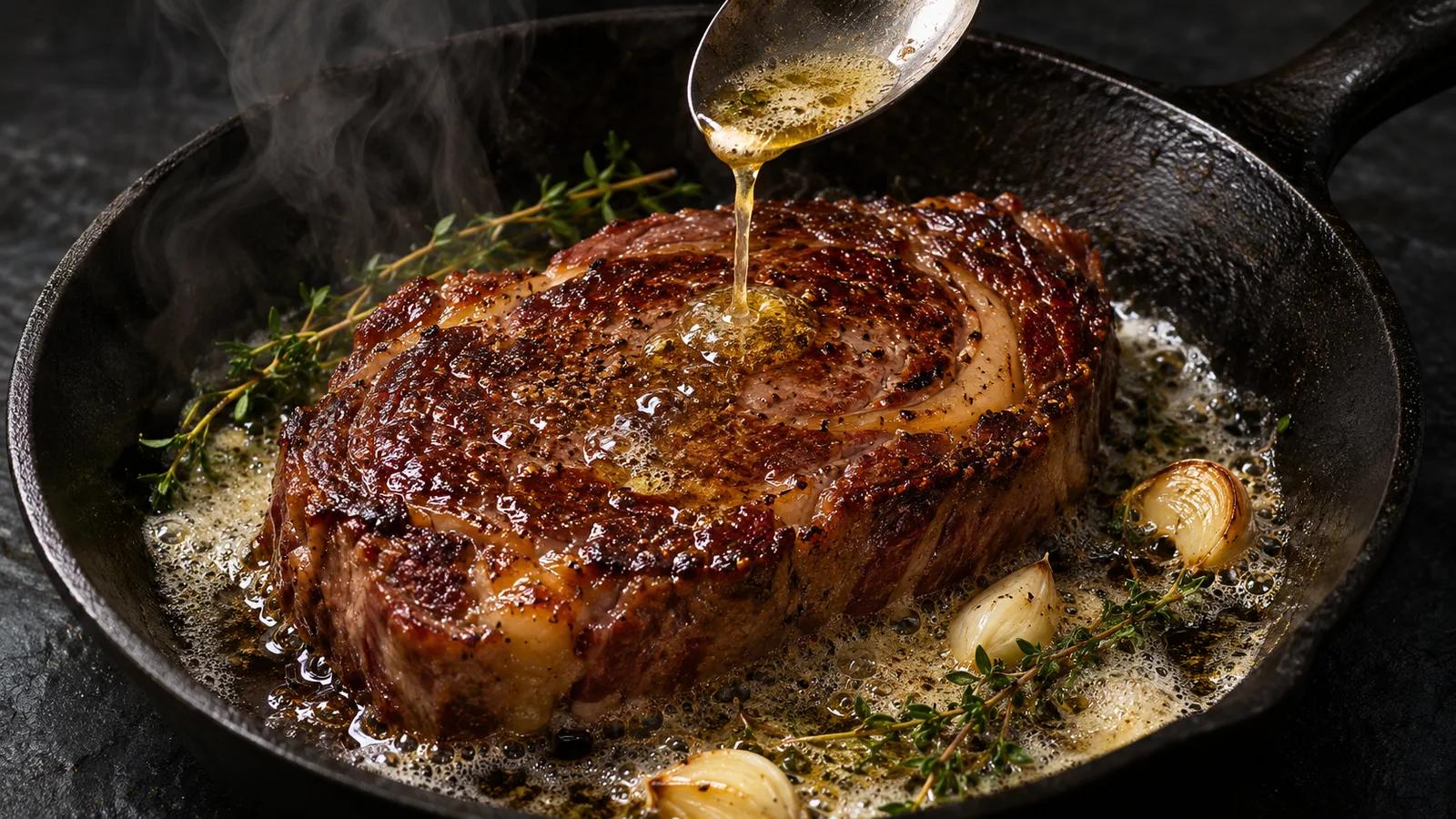
A steak this fatty breaks the usual rules. Butter-basting, oil and a long rest all work against it. Treat the fat as your cooking medium.
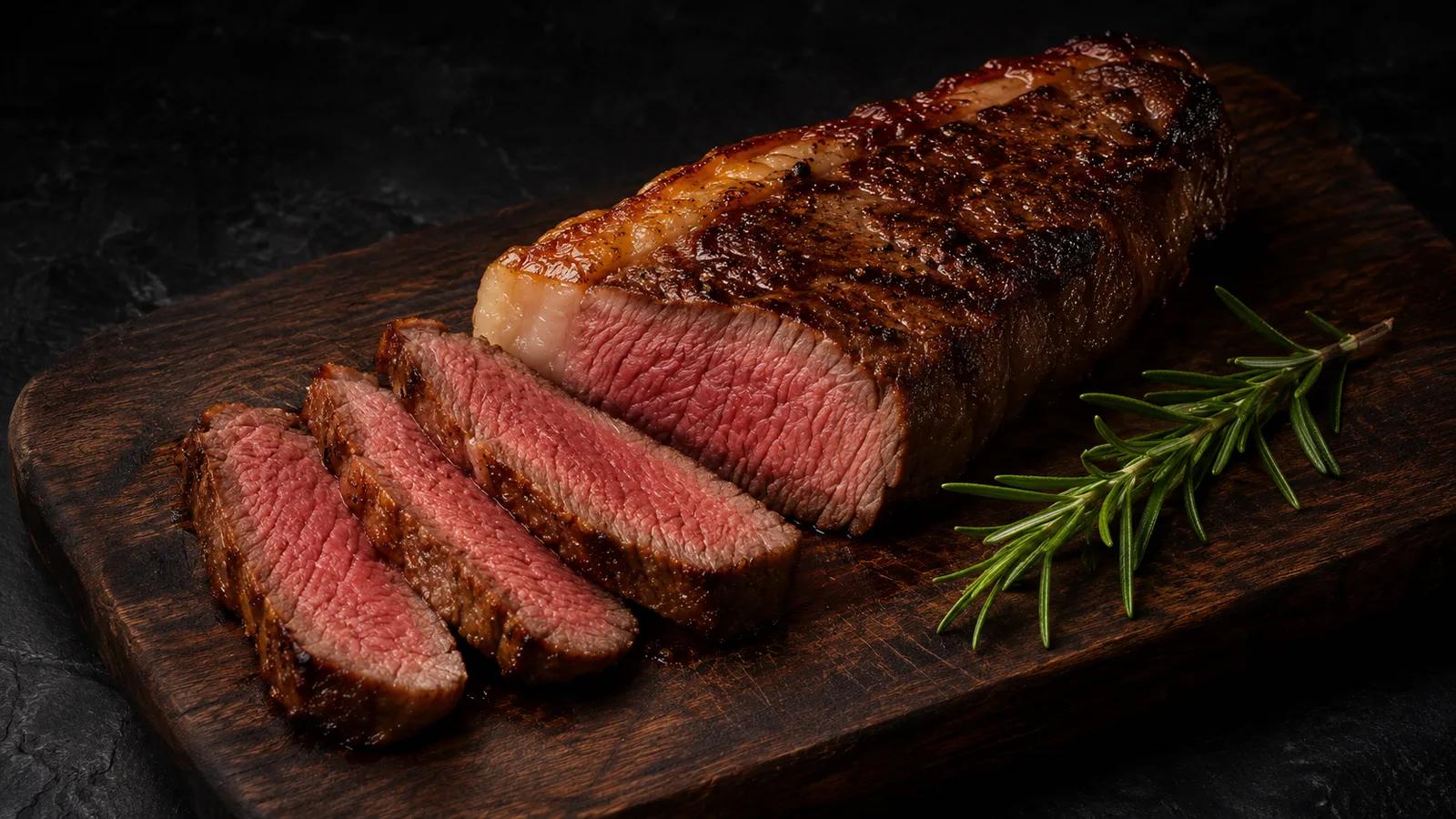
Keep it hot, dry and quick: temper the steak, sear it in a smoking pan greased only with its own fat, and salt it at the last minute. Flaky salt is enough; Wagyu does not need a marinade. Many cooks take high-marble Wagyu a little past medium-rare, off at about 55°C, so the marbling softens all the way through. The full method is in the step by step at the end of this guide, and our steak cooking times guide has the full chart.
A grill works, but the dripping fat causes flare-ups that scorch the outside. A pan or a plancha over the coals gives you more control. For a ribeye at MS8–9, the method in how to cook ribeye steak applies, just with shorter times and no butter.
Serve it plainly: salt, perhaps a little freshly grated wasabi or a sharp pickle to cut the richness. A bowl of rice and a crisp salad round it out.
Halal Wagyu: is it available?
Yes, though it is rare to find halal. Halal status comes down to how the animal was slaughtered and who certified it, not to its breed. So Wagyu can be halal if it comes from a certified plant where each animal is slaughtered the halal way. If halal matters to you, ask the seller for the certificate behind the specific product, not just the brand. More in is beef halal?
All our meat is halal, our Wagyu ribeye included. Ask us for the certificate for any line: our halal standards page says how.
Wagyu at a glance
| Question | Short answer |
|---|---|
| What is it? | Beef from Japanese breeds, chiefly the Japanese Black |
| What makes it different? | Dense, fine marbling inside the muscle |
| What is A5? | Top Japanese yield (A) and quality (5); BMS 8–12 |
| What is MS9+? | The top of the Australian AUS-MEAT marble score |
| How much per person? | 100–150g of high-marble steak |
| How to cook it? | Smoking hot dry pan, fast, sliced thin |
Want to know what else changes marbling, short of going all the way to Wagyu? Breed and feeding both do. The grass-fed vs grain-fed beef guide explains how.
Step by step
Temper the steak
Take the Wagyu out of the fridge 30 minutes before cooking and pat it completely dry with kitchen paper.
Heat a heavy, dry pan
Heat a cast-iron or carbon-steel pan over a high heat until it is smoking hot. Add no oil; rub a piece of the steak's own fat over the surface instead.
Season at the last minute
Salt the steak just before it goes in the pan. Leave pepper and butter for later, if you use them at all.
Sear quickly
For a steak about 2cm thick, cook 1 to 2 minutes a side, holding it on its fatty edge for a minute to render. Pour off the fat if it pools.
Check the temperature
Take it off at about 52°C for medium-rare, or about 55°C if you want the marbling fully softened. It climbs a few degrees as it rests.
Rest and slice thinly
Rest for 3 to 5 minutes, then slice across the grain into thin strips. Plan on 100 to 150g per person; this is rich beef.
Questions and answers
What is Wagyu beef?
Wagyu means "Japanese cattle". It is beef from four native Japanese breeds, above all the Japanese Black, which are bred to lay down fat inside the muscle rather than around it. That fine marbling is what makes Wagyu so rich and soft. Wagyu is now also raised outside Japan, notably in Australia, often crossed with other breeds.
What does A5 Wagyu mean?
A5 is the top grade in the Japanese system. The letter is the yield grade: A means the carcass gives at least 72% usable meat. The number is the quality grade from 1 to 5, set by the weakest of four checks: marbling, meat colour, firmness and texture, and fat quality. A 5 needs a marbling score (BMS) of 8 to 12 and top marks on the other three.
What is BMS in Wagyu?
BMS is the Beef Marbling Standard, the Japanese scale that scores marbling from 1 to 12, with 12 the most heavily marbled. Australia uses its own AUS-MEAT marble score of 0 to 9, so an Australian MS9 and a Japanese BMS 9 are not the same measure.
Why is Wagyu so expensive?
Supply is small and the cattle are slow and costly to raise. Wagyu are typically kept on feed far longer than ordinary grain-fed cattle, Japan has restricted exports of live Wagyu and their genetics since the late 1990s, and only a fraction of carcasses reach the highest grades.
Can you get halal Wagyu?
Yes. Halal depends on how the animal is slaughtered and certified, not on its breed, so Wagyu can be halal when it comes from a certified plant. It is still rare to find halal. All our meat is halal, our Wagyu ribeye steak (MS8 to 9) included. Ask us for the certificate for any line.