On this page
Stand at a butcher's counter for long enough and you will hear the question: ribeye or sirloin? The short answer: ribeye is the richer, juicier steak; sirloin is the leaner, firmer one with a cleaner beef flavour. Neither is a step down from the other. They suit different nights, different cooks and different ways of liking your steak.
Ribeye vs sirloin at a glance
| Ribeye | Sirloin | |
|---|---|---|
| Where it is cut | Fore rib, just behind the shoulder | The loin, behind the ribs |
| Muscles | The eye (longissimus) plus the cap (spinalis) | The longissimus alone |
| Fat | Marbled through the meat, with a seam of fat between eye and cap | Mostly in one strip along the edge |
| Fat per 100g (our steaks) | 22g | 12g |
| Texture | Soft and juicy, looser grain | Firmer bite, tighter grain |
| Flavour | Rich, buttery, beefy | Clean, beefy, more meat-forward |
| Price per steak | Usually a little more, across the trade | Usually a little less, across the trade |
| Best cooked | Hot pan or grill, fat edge first, medium-rare to medium | Hot pan or grill, fat strip first, rare to medium |
| Most forgiving if you overcook it | Yes | No |
Our ribeye and sirloin steaks are both hand-cut by us in Wolverhampton at 250 to 300g, which usually means 2.5 to 3cm thick. Both are halal.
Where they come from
Run your hand along a cow's back from the shoulder to the hip and you are following one long muscle, the longissimus. Butchers cut it into two famous steaks.
Ribeye: the fore rib
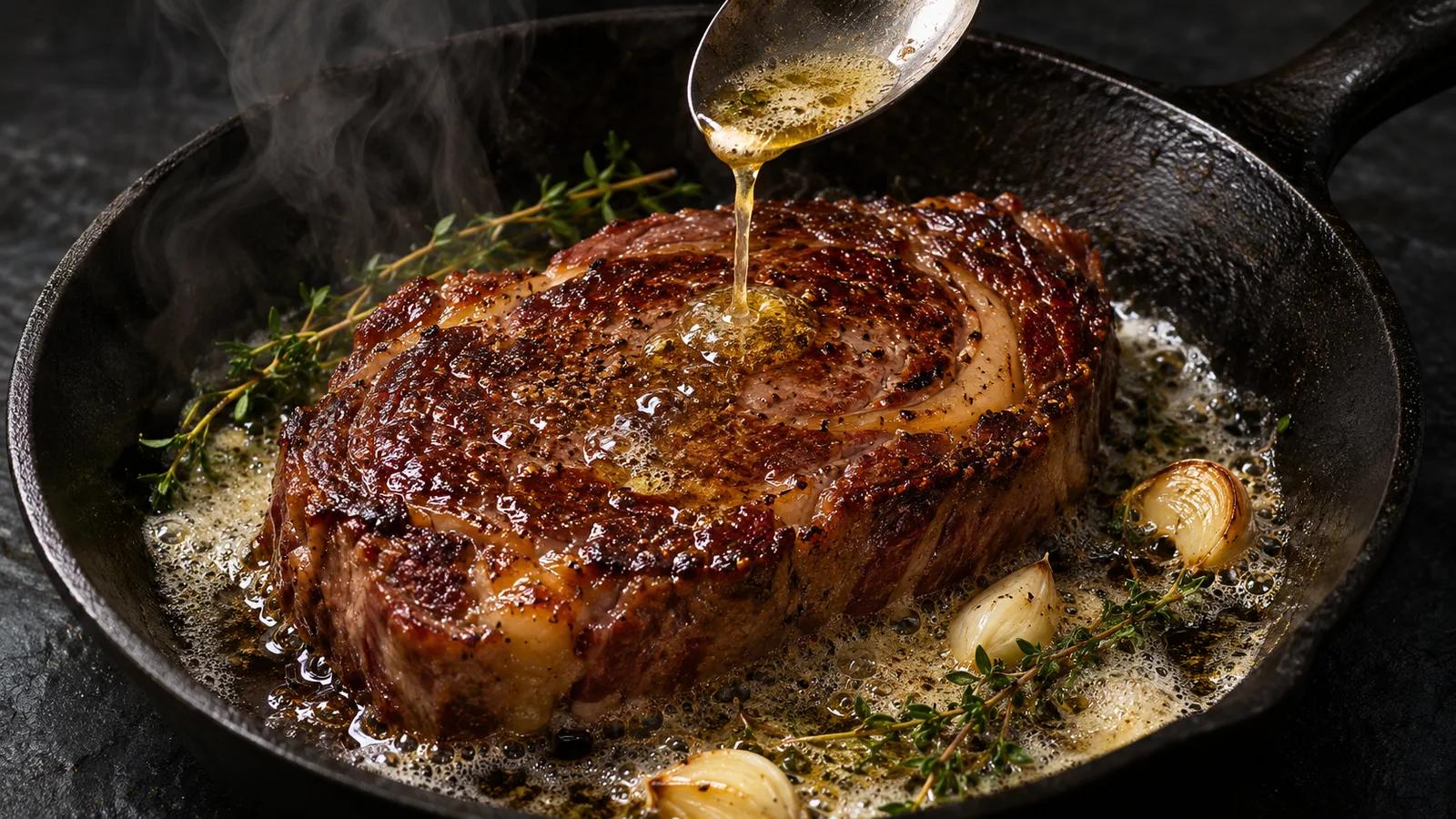
At the front end, over the ribs, the longissimus is joined by a second muscle curled around its outside: the spinalis, or ribeye cap. A seam of fat sits between the two, and this part of the animal carries more marbling than the loin behind it. Cut it into steaks and you get the ribeye: roughly round, with a visible "eye" of fat near the middle and the cap wrapped around one side. The cap is loose-grained, very well marbled and, for a lot of butchers, the most prized bite on the steak.
Leave the bone on and you have a bone-in rib or côte de boeuf. Leave a long length of bone on, cleaned back, and it is a tomahawk.
Sirloin: the loin
Behind the ribs, the cap muscle tapers off and the longissimus carries on alone into the loin. Here it is called sirloin. With only one muscle and no seam of fat inside it, sirloin is a neater, more even steak: a tight-grained block of meat with a band of fat along one edge. Cut it on the bone with the fillet attached and you have a T-bone or porterhouse.
How they eat
Ribeye is the flavour lover's steak. Once the fat has had enough heat to melt, it bastes the meat from the inside, so every mouthful is juicy and rich. The trade-off is that the fat needs that heat: cooked rare, the seam around the cap can stay waxy and chewy.
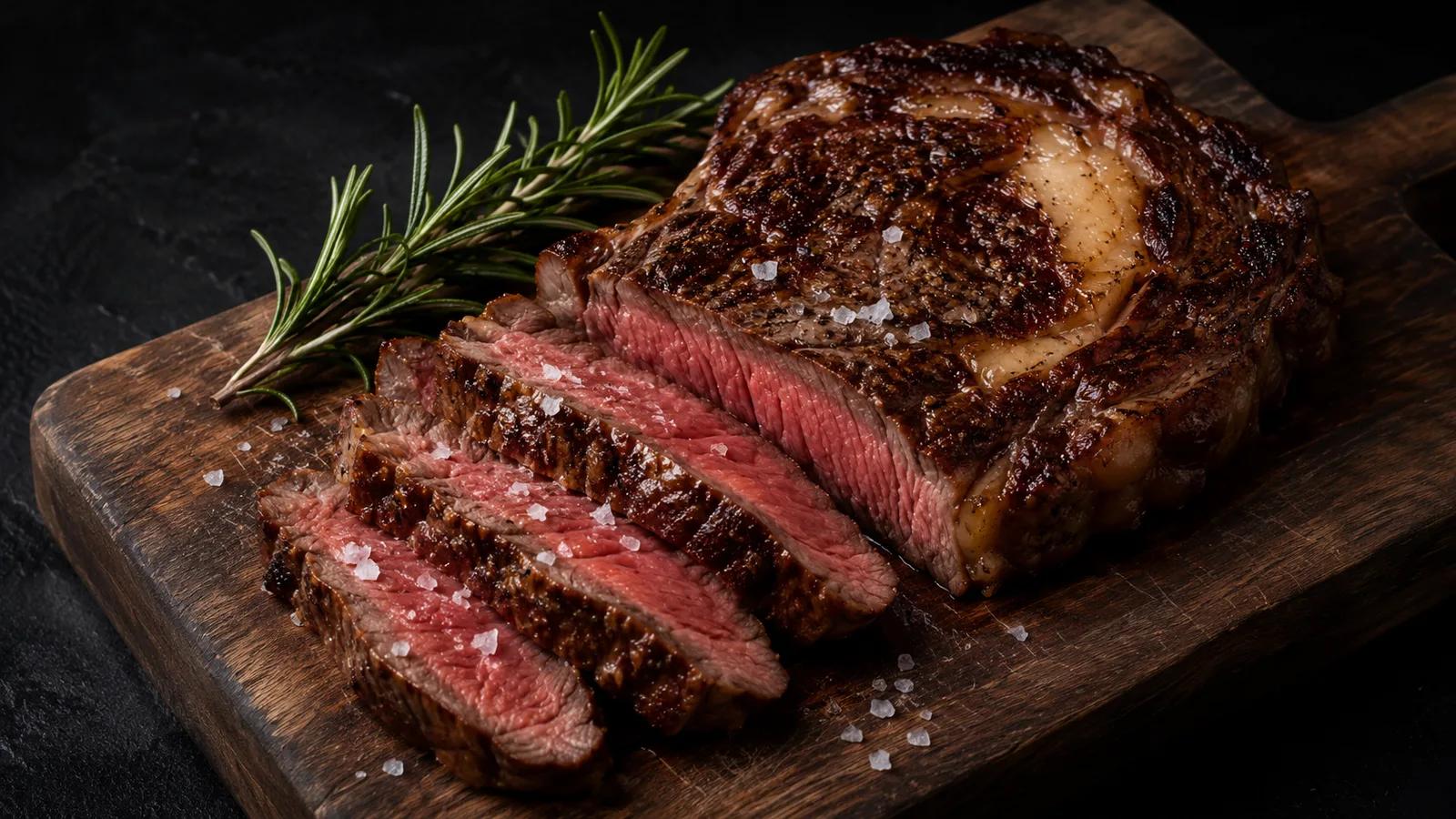
Sirloin is the steak for people who like to taste the beef itself. It is tender without being soft, with a firmer chew and a cleaner, more meat-forward flavour. It also slices neatly into even strips, which makes it the better steak for sharing off a board, for steak sandwiches and for anything eaten cold the next day, when ribeye's fat sets firm.
How to cook each one
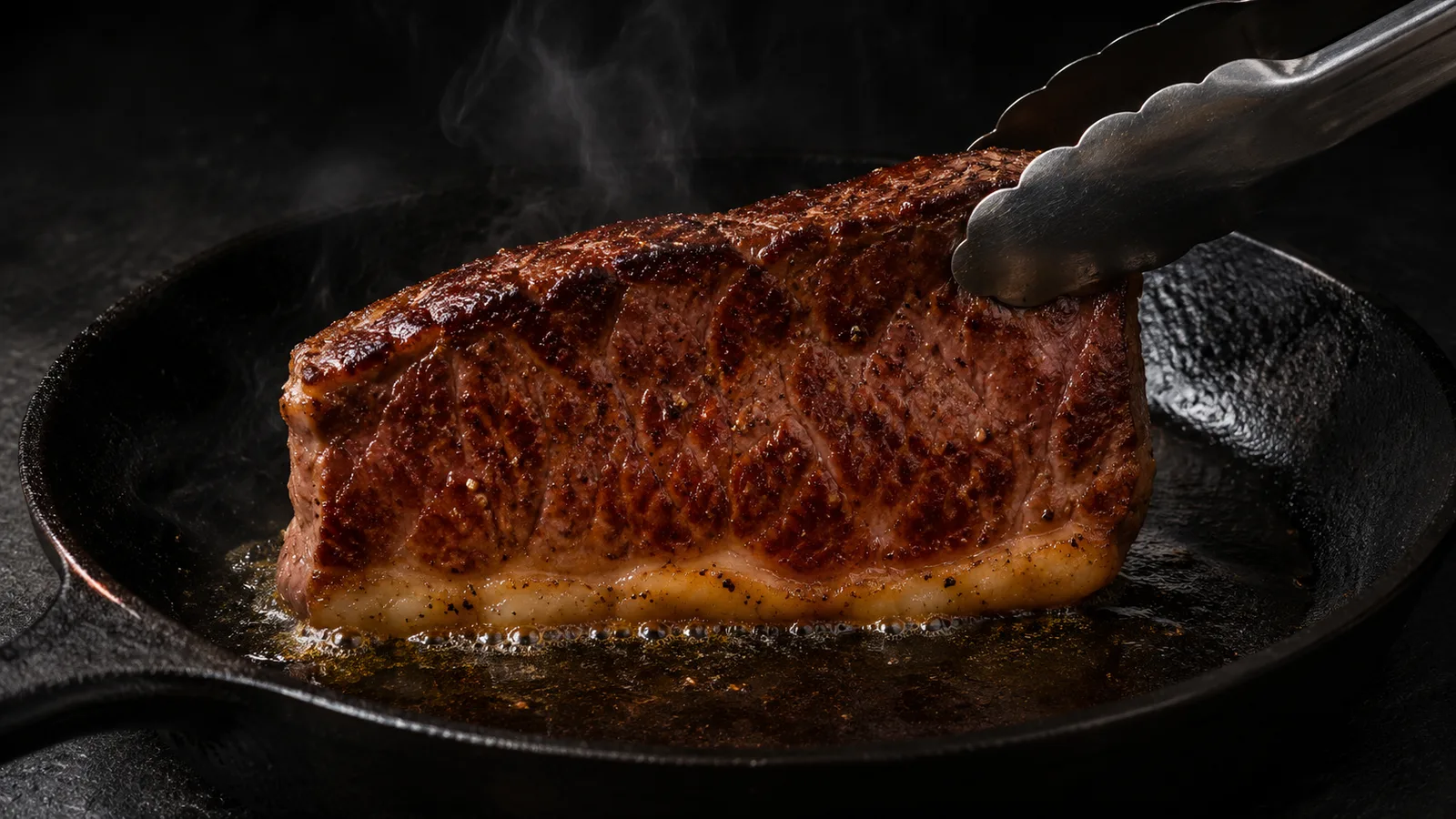
The method is almost the same: a dry steak, a smoking-hot heavy pan, the fat edge rendered first, then the faces seared. The difference is where you stop.
| Doneness | Take it off at | Ribeye | Sirloin |
|---|---|---|---|
| Rare | 48°C | Fat can stay waxy | Good |
| Medium-rare | 52°C | Ideal | Ideal |
| Medium | 57°C | Ideal | Good, but stop here |
| Medium-well | 62°C | Still juicy | Tightens and dries |
| Well done | 68°C | Choose this cut | Not recommended |
Rest either steak for 5 minutes; the centre climbs another 2 to 4°C as it sits.
- Ribeye: stand it on its fat edge for 1 to 2 minutes, then about 2½ to 3 minutes a side for medium-rare on a 2.5cm steak. A marbled grain-fed ribeye barely needs oil. The full method, including the reverse sear for thick steaks, is in how to cook ribeye steak.
- Sirloin: snip through the fat strip every 2 to 3cm so it does not curl, render the edge, then cook to the same times. Pull it at 52 to 57°C and slice across the grain. See how to cook sirloin steak.
Every cut on one chart is in steak cooking times.
Price: what you are paying for
Across the trade, ribeye usually costs a little more than sirloin.
Our ribeye and sirloin are both sold per steak, hand-cut at 250 to 300g, and current prices are on each product page.
 Aberdeen Angus Ribeye SteakFrom £14.00
 Aberdeen Angus Sirloin SteakFrom £14.00
Grass-fed steaks eat leaner and firmer than grain-fed ones, whichever cut you pick; grass-fed vs grain-fed beef explains why.
The verdict, occasion by occasion
| The occasion | Our pick | Why |
|---|---|---|
| Midweek steak and chips | Sirloin | Quick, lean, good value, and you can trim the fat on the plate |
| Date night or a treat | Ribeye | Richer and juicier; go grain-fed for the most marbling |
| You like it medium-well or well done | Ribeye | The marbling keeps it juicy as it cooks through |
| You like it rare | Sirloin | Ribeye's fat needs more heat than rare gives it |
| Sliced on a board to share | Sirloin | Even shape, neat slices, no seam of fat in the middle |
| Steak sandwiches or cold the next day | Sirloin | Ribeye's fat sets firm once cold |
| On the barbecue | Ribeye | Its fat keeps it juicy over fierce heat; watch for flare-ups |
| First time cooking steak | Ribeye | More room for error if you overshoot |
Still torn? Cook one of each, slice them and share.
What about fillet?
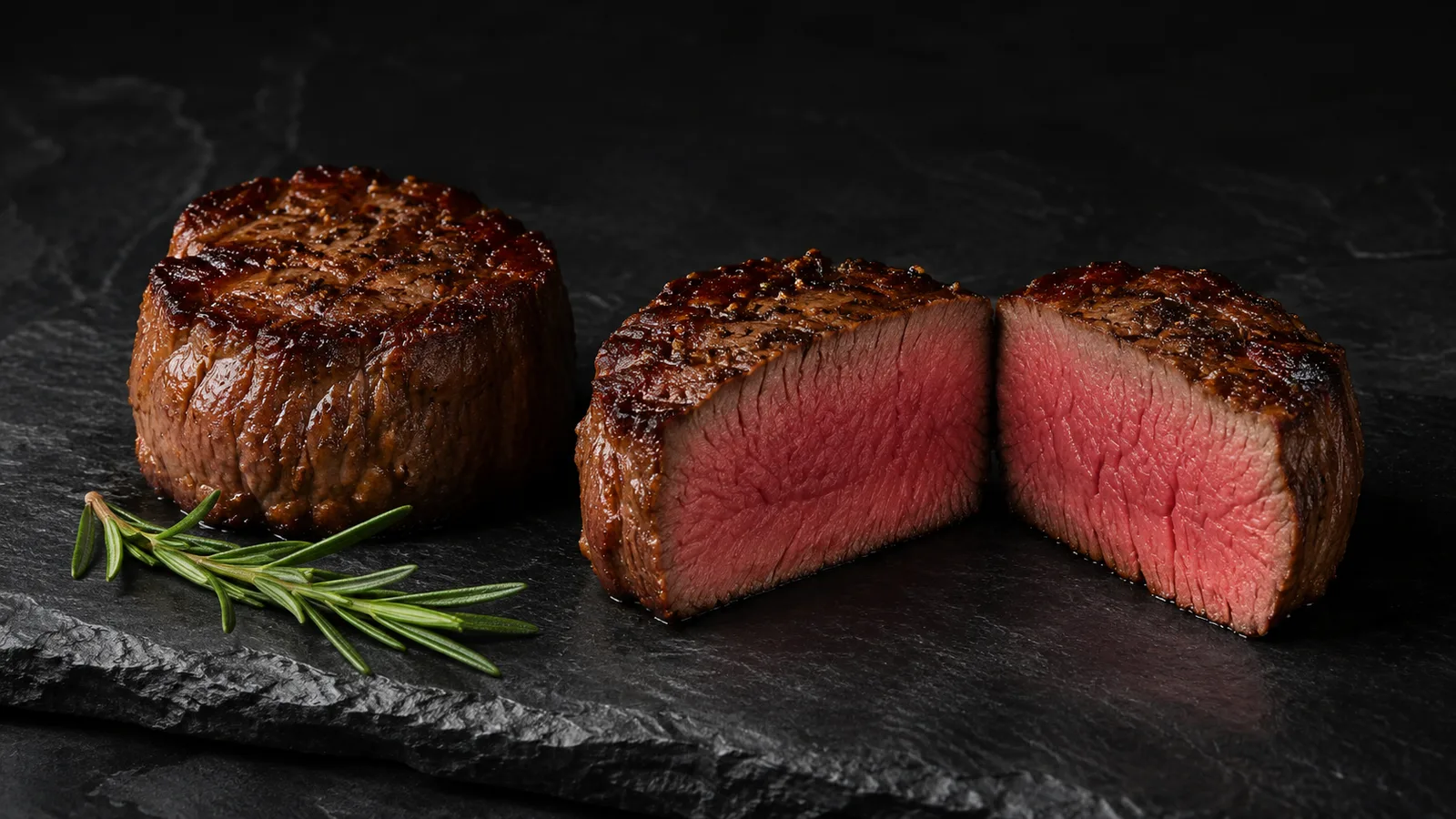
Fillet comes from a different muscle altogether, the psoas major, tucked under the backbone below the sirloin. It does almost no work, so it is the most tender steak on the animal. It is also the leanest of the three, at 6g of fat per 100g against ribeye's 22g, and its flavour is milder.
Fillet vs ribeye comes down to texture against flavour. Choose fillet if you want a soft, buttery steak cooked rare to medium-rare, with a sauce or plenty of butter in the pan. Choose ribeye if you want more flavour and juice, or you like your steak medium or beyond, where fillet turns dry.
Our fillet steak is sold by weight in 250g, 500g and 1kg pieces. The method is in how to cook fillet steak, and every cut is mapped in cuts of beef.
The short answer
Buy ribeye for flavour, juice and forgiveness, especially if you cook to medium or beyond. Buy sirloin for a leaner, firmer steak with a clean beef taste that slices beautifully at medium-rare. Buy fillet when tenderness matters more than anything else.
Questions and answers
What is the difference between ribeye and sirloin?
Both come from the same long muscle that runs along the cow's back. Ribeye is cut further forward, from the fore rib, and includes the cap muscle, a seam of fat and plenty of marbling, so it eats rich, soft and juicy. Sirloin is cut further back, from the loin. It is leaner, with its fat in one strip along the edge, a tighter grain, a firmer bite and a cleaner beef flavour.
Which is more tender, ribeye or sirloin?
Both are tender steaks, but ribeye usually eats softer because of the fat running through it and the loose-grained cap around the outside. Sirloin has a tighter grain and a firmer bite. If tenderness is all you care about, fillet is more tender than either.
Is ribeye or sirloin better for well-done steak?
Ribeye. Its marbling keeps it juicier as it cooks through, so it copes with medium-well far better than sirloin. Sirloin is lean and tightens noticeably once the centre goes above about 60°C. If you like your steak well done, choose ribeye and turn the heat down after the first couple of minutes a side so the crust does not burn.
Is ribeye more expensive than sirloin?
Usually a little, mostly because of demand for its marbling. Origin, breed and feeding change the price as much as the cut does, so a grass-fed ribeye can cost less than a grain-fed or certified Angus sirloin. Current prices are on each product page.
Fillet vs ribeye: which should I choose?
Fillet if you want the most tender, mildest steak and you will cook it rare to medium-rare. Ribeye if you want more flavour and juice, or you like your steak medium or beyond. Fillet is lean and dries out past medium; ribeye's fat keeps it forgiving.