On this page
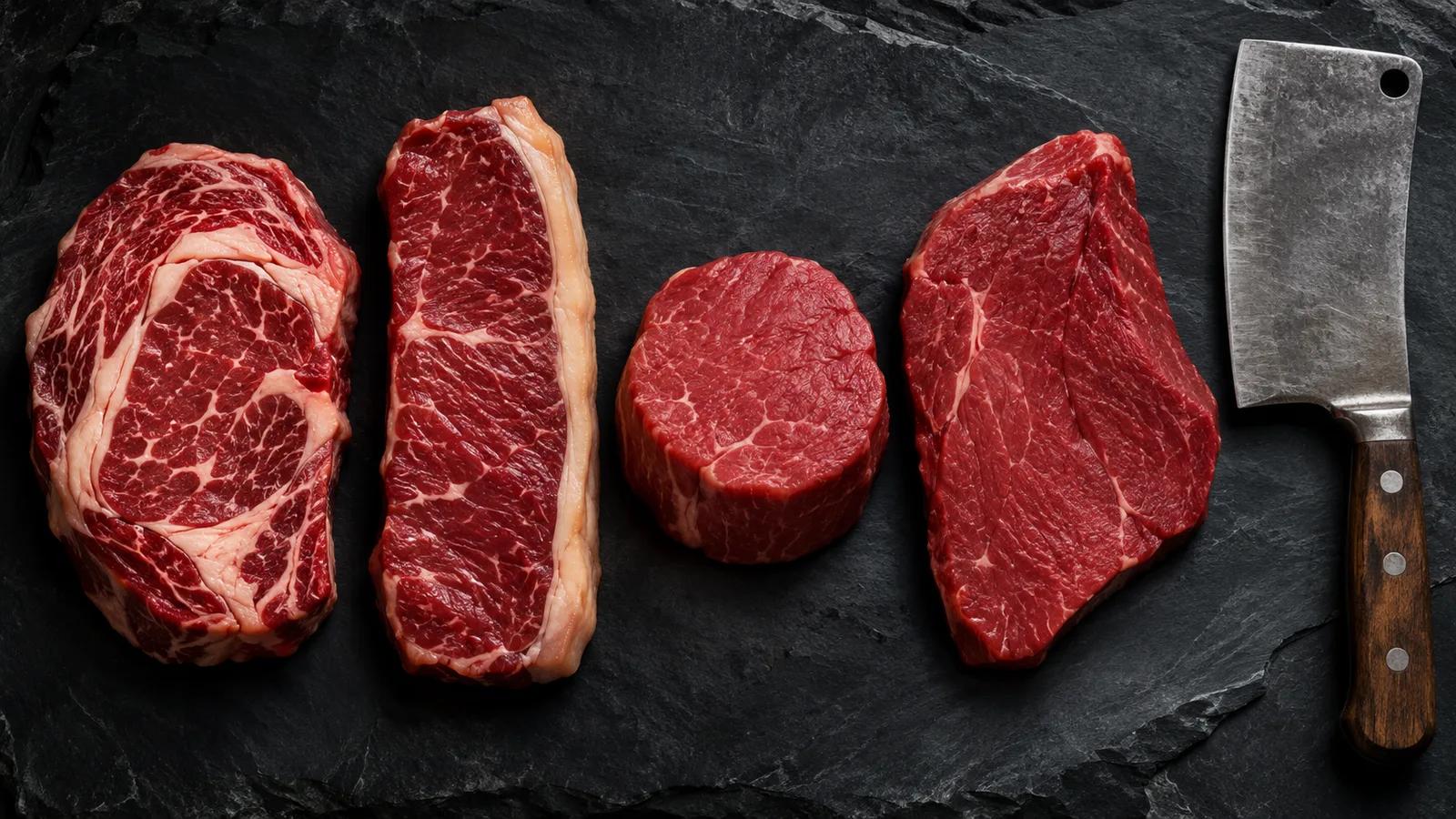
Picanha is the rump cap: a triangular muscle that sits on top of the rump, near the tail end of the cow, under a thick white cap of fat. Brazilians call it picanha and treat it as the star of the barbecue. In Britain it is usually just called rump cap, and for a long time it went into rump steaks or roasting joints without anyone giving it a name of its own.
It is a steak for people who want flavour first. It has a looser grain and more chew than sirloin or fillet, a deep, beefy taste, and that fat cap, which melts and crisps as it cooks and bastes the meat on the way. Cooked well and sliced the right way, it eats far above its price.
Picanha in English: the names around the world
The cut is the same everywhere. Only the name and the way it is trimmed change.
| Where | Name for the cut |
|---|---|
| Brazil | Picanha |
| UK, Ireland, Australia | Rump cap |
| United States | Top sirloin cap, coulotte |
| Argentina | Tapa de cuadril |
Americans call it "sirloin cap" because an American top sirloin comes from the area a British butcher calls the rump. Our cuts of beef guide shows exactly where it sits on the cow.
Where picanha comes from on the cow
The rump sits between the loin and the back leg. It is not one muscle but several, joined along natural seams. The cap is the top end of the biceps femoris, the big muscle that further down the leg becomes the silverside. It sits over the top of the rump like a lid, with its fat on the outside.
A butcher takes the picanha off by cutting along that seam, separating the cap from the rump underneath. What comes off is a flat triangle, thin at the point, thicker at the wide end, with the fat covering one side completely. The other side is lean, red meat, sometimes with a thin silvery membrane that is worth trimming off.
A picanha steak is simply a thick slice of that cap, with every steak keeping its strip of fat. A Brazilian rule of thumb says a true picanha weighs no more than about 1.2kg; a heavier one has usually taken in some of the tougher muscle underneath.
Because the rump is a working muscle, picanha has more chew than the loin cuts and more flavour too. The fat cap does a lot of the work that marbling does in a ribeye: it carries flavour and keeps the meat moist.
Why picanha is a Brazilian churrasco favourite
Churrasco is Brazilian barbecue: beef grilled over charcoal or wood, seasoned with little more than coarse salt. Picanha is the cut many Brazilians reach for first.
The classic way to do it is to cut the whole cap into thick slices, three or four fingers wide, curl each one into a C with the fat on the outside, and push it onto a long skewer. It grills slowly over the coals, fat dripping and crisping. In a rodízio restaurant, waiters carry the skewers from table to table and carve thin slices from the outside straight onto your plate. The skewer then goes back over the coals, so the next layer browns before it comes round again.
It is served simply. Brazilians eat it with farofa (toasted cassava flour), rice and beans, and molho à campanha, a sharp salsa of tomato, onion, peppers and vinegar that cuts through the fat. Chimichurri is Argentine, not Brazilian, but it works just as well.
The fat cap: keep it, score it, render it
The single biggest mistake with picanha is trimming off the fat before cooking. Leave it on. The fat is there to be rendered: cooked slowly enough that most of it melts into the pan and the rest turns crisp and golden.
- Trim to about 1cm. If the fat is thicker than that, trim it back. Too much fat will not render through before the meat overcooks.
- Score it. Cut a crisscross through the fat about 1.5cm apart, stopping before you reach the meat. This helps the fat render, stops the steak curling and lets the salt in.
- Salt it hard. Picanha takes more salt than you think. Brazilians use sal grosso, coarse rock salt. Coarse sea salt does the job.
- Fat first, meat second. Always start fat-side down.
Slicing picanha against the grain
Picanha has a pronounced grain, the lines of muscle fibre you can see running through the meat. How you cut it decides whether it eats tender or chewy.
There are two cuts to think about:
- Into steaks, raw. The whole cap is cut into steaks with the grain, so the fibres run along the length of each steak. That is the traditional way to cut it.
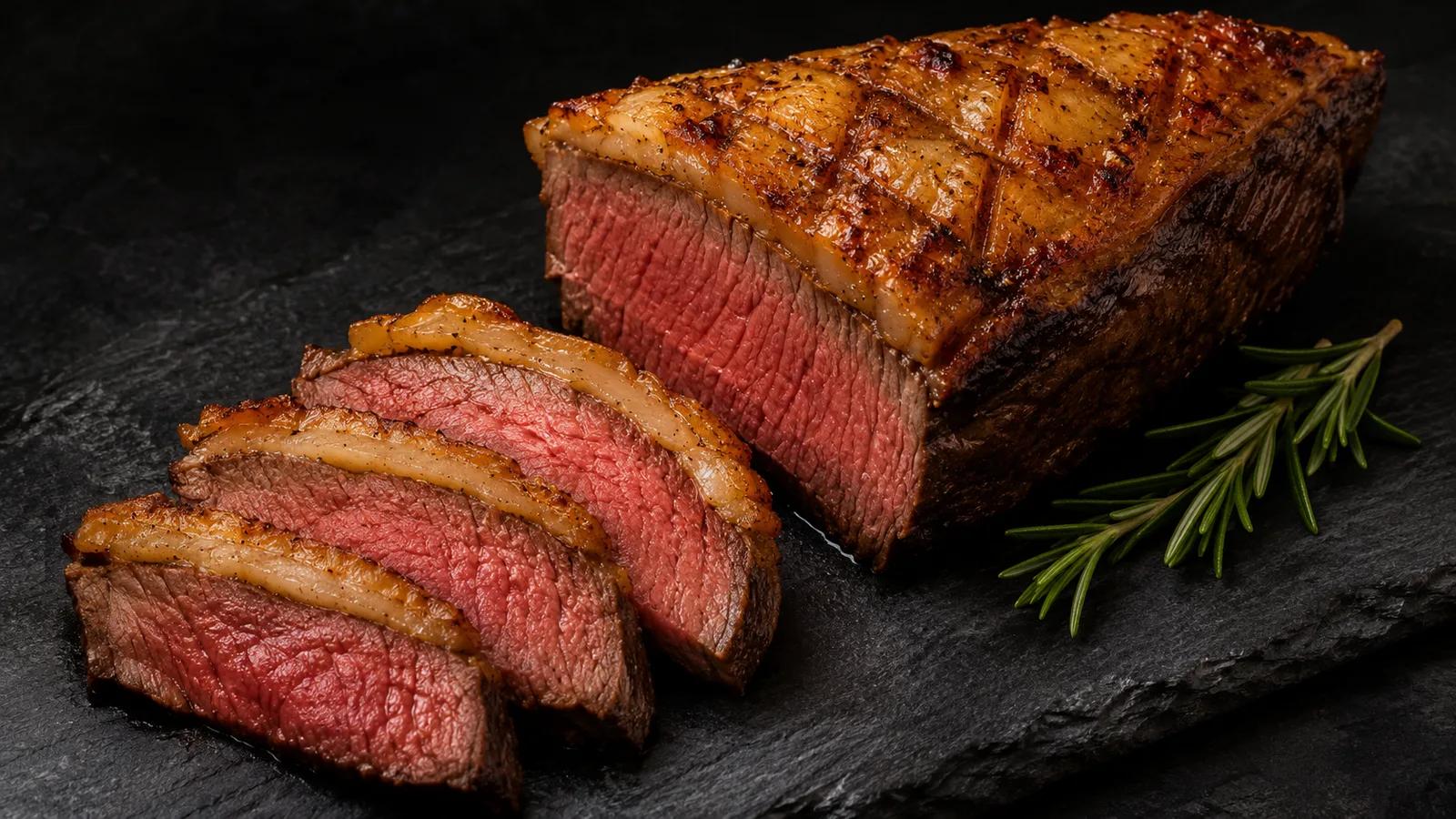
- To serve, cooked. Each cooked steak is then sliced against the grain, across those fibres, into strips about 5mm to 1cm thick. This cuts the fibres short, so each mouthful is tender.
Look at the raw steak before you cook it and note which way the lines run, because they are harder to see under a crust. The grain can shift slightly across a large piece, so check as you go. The same rule applies to flank, which has an even stronger grain.
How to cook picanha
These timings are for a picanha steak around 3cm thick and 250 to 300g.
In a pan
- Take the chill off. Out of the fridge 20 to 30 minutes before, then pat it dry.
- Score and salt. Score the fat and salt the steak all over.
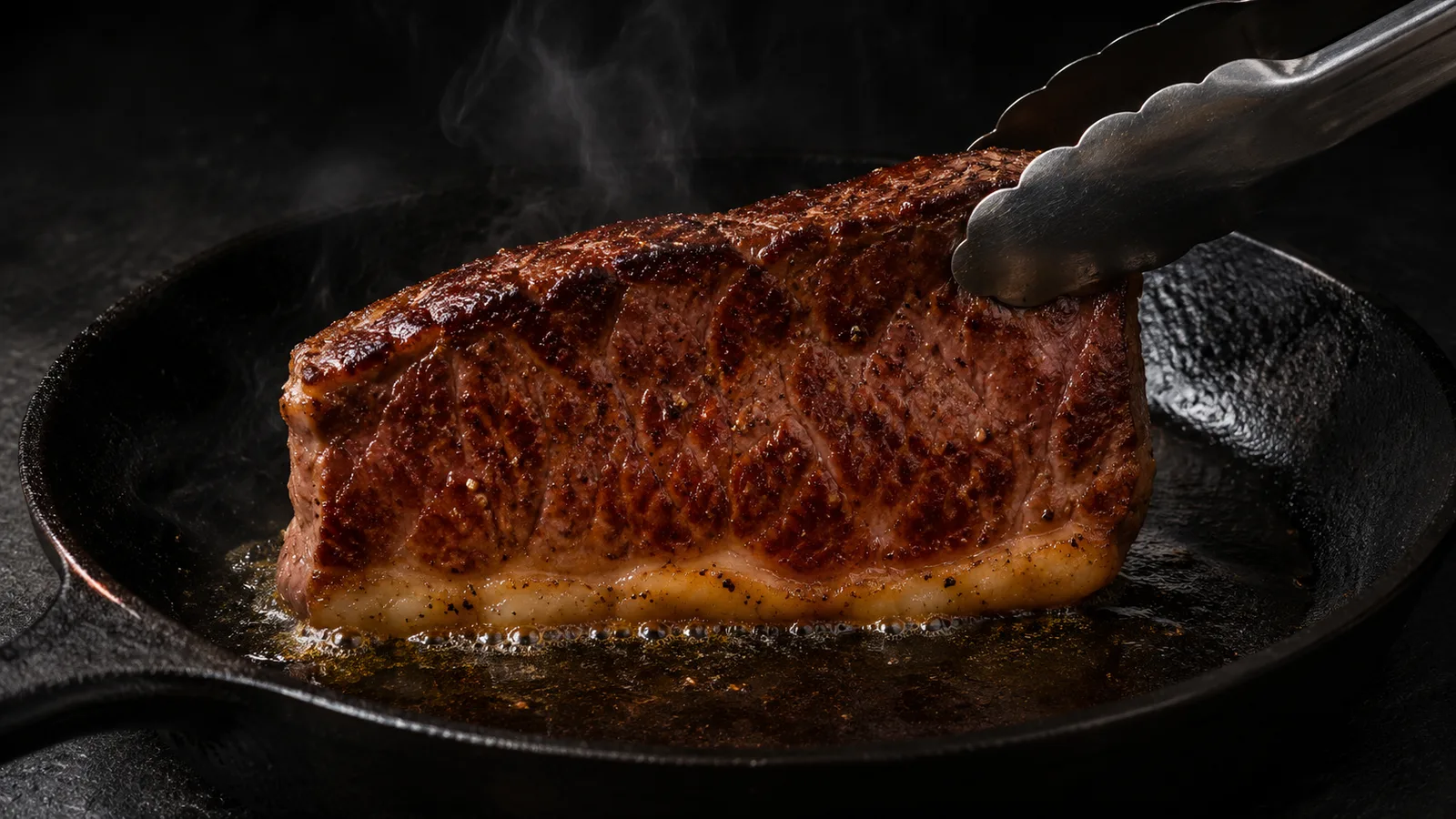
- Render. Lay it fat-side down in a dry, heavy pan, cast iron if you have it, over a medium-high heat. Hold it upright with tongs if it will not stand. Give it 4 to 5 minutes, until the fat is golden and crisp. Pour off fat as it builds up and keep it for roasting potatoes.
- Sear. Turn the heat up and cook the meat 2 to 3 minutes a side.
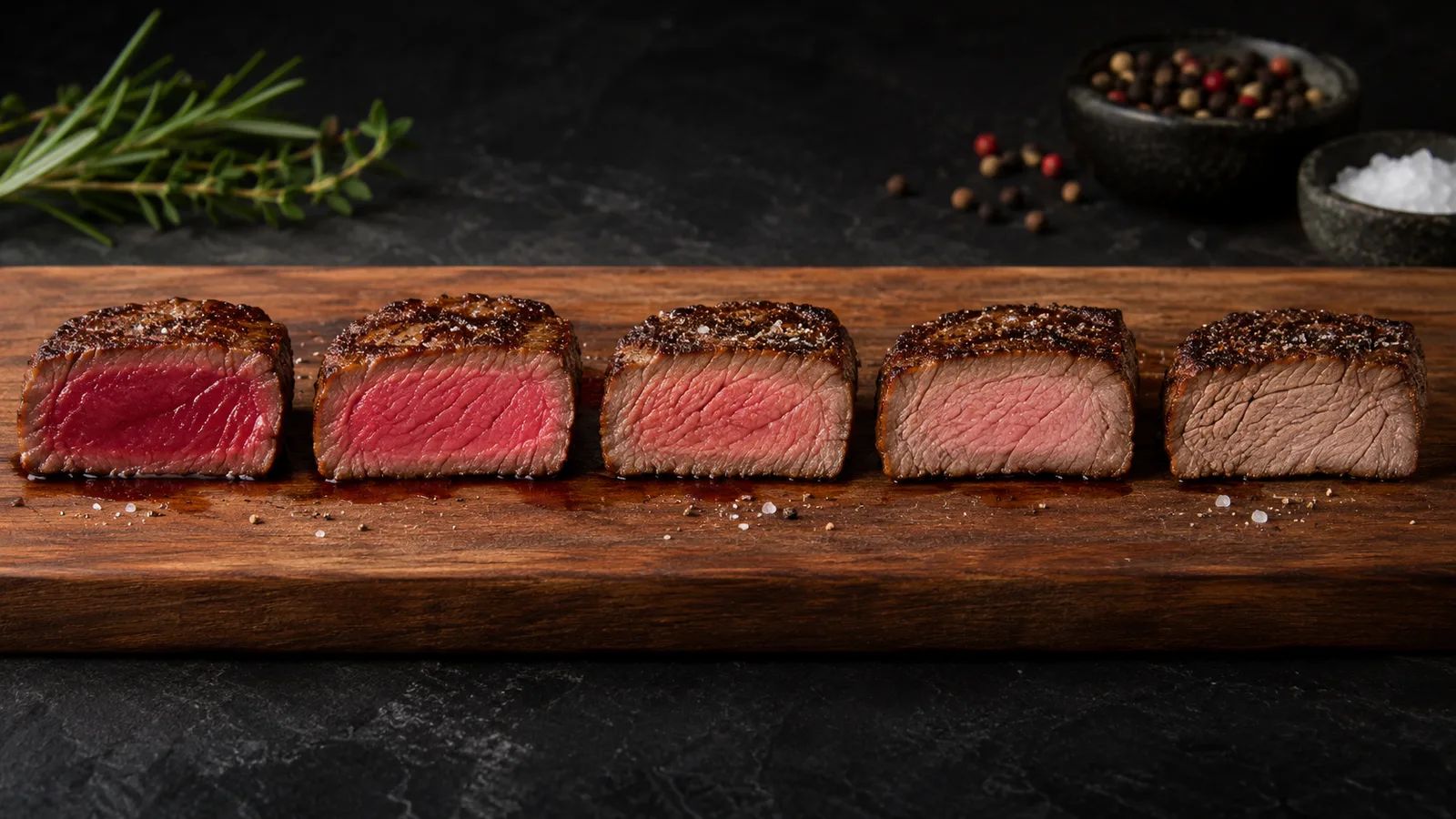
- Check the centre. Take it off at 52°C for medium-rare or 57°C for medium.
- Rest and slice. Rest for 5 minutes, then slice thinly against the grain.
On a BBQ
Set the barbecue up for two zones: coals banked on one side, nothing on the other.
- Render on the cool side. Start the steak fat-side down over the side without coals, lid on if you have one, for 6 to 8 minutes. Fat dripping straight onto hot coals causes flare-ups that blacken the outside.
- Sear over the coals. Move it over the heat and sear the meat 2 to 3 minutes a side, then give the fat a final 30 seconds over the coals to crisp.
- Temperature, rest, slice exactly as for the pan.
For the full churrasco effect, cut the steak in half along the grain, curl each piece into a C, fat outside, and skewer it before grilling.
| Doneness | Take off at | After resting |
|---|---|---|
| Rare | 48°C | about 50°C |
| Medium-rare | 52°C | about 55°C |
| Medium | 57°C | about 60°C |
Keep picanha to medium or below. Past that, the leaner meat under the cap firms up and loses its juice. For every cut's times on one page, see steak cooking times.
It is rare to find halal picanha sold per steak; in Britain the cap usually goes into rump steaks and joints instead. For how halal beef is slaughtered and certified, read is beef halal?
If you like a fat edge you can render but want a more tender loin steak, the same fat-first method works on a sirloin.
Step by step
Take the chill off
Take the picanha out of the fridge 20 to 30 minutes before cooking and pat it completely dry with kitchen paper, fat and all.
Score the fat cap
With a sharp knife, score the fat in a crisscross about 1.5cm apart, cutting through the fat but not into the meat. Trim the fat to about 1cm first if it is thicker.
Salt it well
Season all over with coarse sea salt, working it into the scored fat. Do it just before cooking, or up to a day ahead and leave the steak uncovered in the fridge.
Render the fat
Put the steak fat-side down in a dry, heavy pan over a medium-high heat, or on the cooler side of a BBQ. Cook for 4 to 5 minutes until the fat is golden and crisp. Pour off excess fat as it collects.
Sear the meat
Turn up the heat, or move the steak over the hot coals, and sear the meat for 2 to 3 minutes a side for a steak about 3cm thick.
Check the core temperature
Push a probe thermometer into the thickest part. Take the picanha off at 52°C for medium-rare or 57°C for medium.
Rest and slice against the grain
Rest for 5 minutes. Find the direction the fibres run, then slice across them into strips about 5mm to 1cm thick, keeping a piece of crisp fat on each.
Questions and answers
What is picanha in English?
In British butchery, picanha is the rump cap: the triangular muscle that sits on top of the rump, with a thick layer of fat over it. In the United States it is called the top sirloin cap or coulotte. Picanha is the Brazilian Portuguese name, and in Argentina it is tapa de cuadril.
Is picanha the same as rump steak?
Not quite. Rump steak is cut from the whole rump, a group of several muscles. Picanha is just one of them, the cap, separated from the rest along its natural seam and kept with its fat on. A traditional full-width British rump steak often includes a piece of the cap along its fatty edge, but a picanha steak is all cap.
Should you cut the fat off picanha before cooking?
No. The fat cap is the point of picanha. Trim it to about 1cm if it is thicker, score it in a crisscross without cutting into the meat, and render it slowly, fat-side down, before you sear the meat. It crisps up and bastes the steak as it cooks. You can always leave it on the side of the plate.
How long do you cook a picanha steak?
For a picanha steak about 3cm thick, render the fat cap for 4 to 5 minutes over a medium-high heat, then sear the meat for 2 to 3 minutes a side. Take it off at 52°C in the centre for medium-rare, rest it for 5 minutes and slice it thinly against the grain.
Can you buy halal picanha in the UK?
Yes, though it is rare to find halal picanha sold per steak. In Britain the cap usually goes into rump steaks and joints rather than being sold on its own. Halal depends on how the animal was slaughtered and certified, not on the cut, so ask the seller for the certificate that covers the product you are buying.