On this page
Grass-fed beef comes from cattle that spend their whole lives eating grass and forage. Grain-fed beef usually comes from cattle that spent most of their lives on grass too, then ate a grain ration for their last few months. That final stretch changes how much fat the animal lays down inside the muscle, and so it changes everything you notice on the plate: the colour of the fat, the marbling, the texture and the flavour.
Neither one is a lesser steak. They are two different styles of beef, and once you know what each does well, you can buy for the meal you are cooking.
Grass-fed vs grain-fed beef at a glance
| Grass-fed | Grain-fed | |
|---|---|---|
| Diet | Grass on pasture, plus hay and silage when grass is short | Grass for most of its life, then a grain ration, usually in a feedlot |
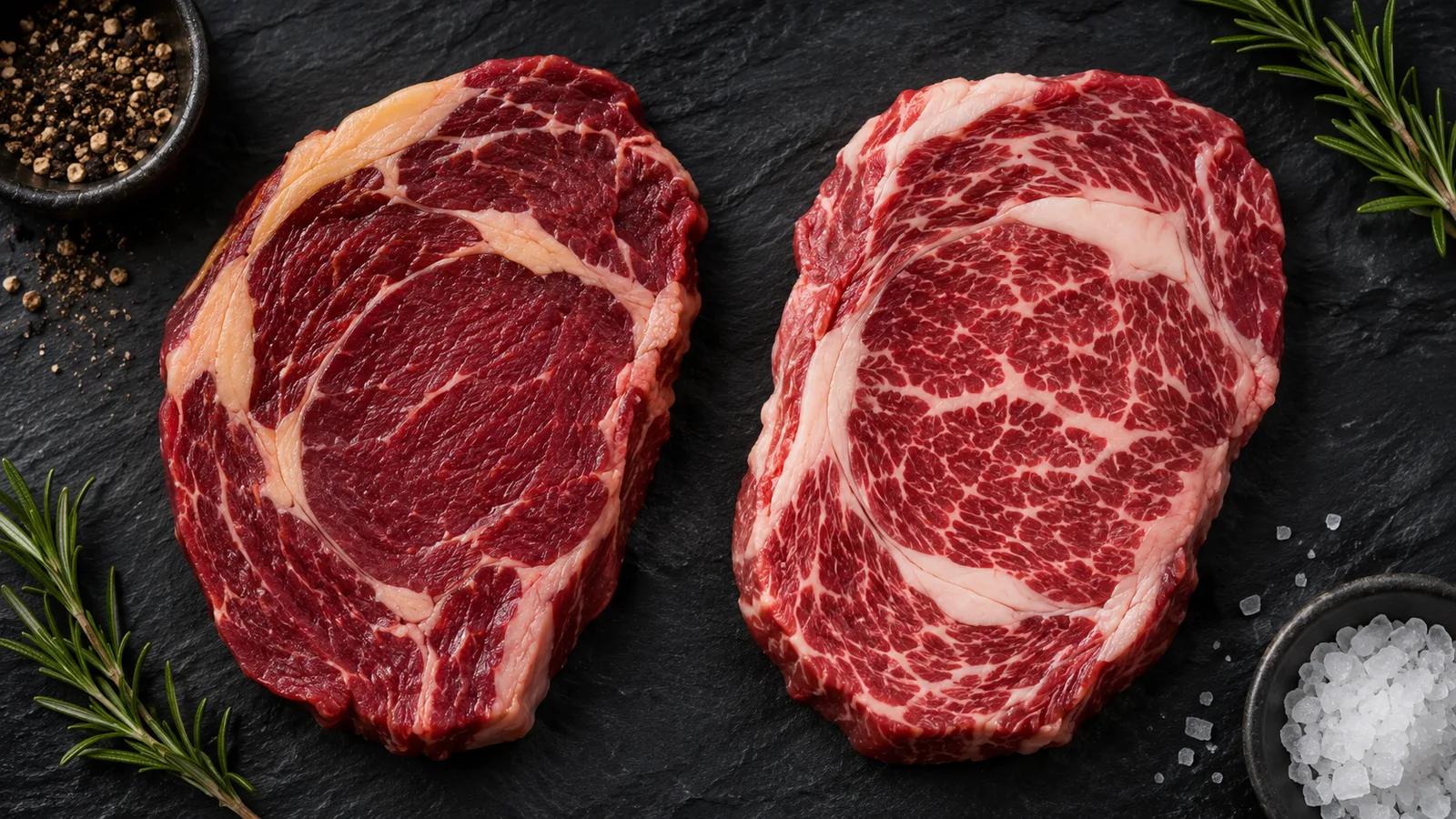
| Fat colour | Creamy to yellow | White |
| Marbling | Lighter, finer flecks | More, and more evenly spread |
| Texture | Firmer, more chew | Softer, juicier |
| Flavour | Deep, savoury, beefy, sometimes grassy or mineral | Mild, sweet, buttery |
| Consistency | Shifts a little with the season and the grass | More even from one batch to the next |
| Suits | Rare to medium-rare; lean cuts; flavour first | Medium-rare to medium; ribeye; richness first |
What the words actually mean
The labels get used loosely, so here is how a butcher reads them.
- Grass-fed. The animal's diet was based on grass and forage. Forage includes hay (dried grass) and silage (grass preserved by fermenting it), which carry cattle through winter or a dry spell. It does not, on its own, rule out grain.
- Grass-finished, 100% grass-fed or pasture-fed. Stronger wording: grass and forage right up to slaughter, with no grain finish. In Britain, the Pasture for Life scheme certifies animals raised only on pasture and forage for their whole lives.
- Grain-fed. Raised on grass, then finished on a ration of grain, such as barley, wheat or maize. The time on grain varies by programme and country. Some labels call it "grain-finished"; it means the same thing.
Most British beef is grass-based too, with silage and some extra feed over winter, but in the UK "grass-fed" has no legal definition. The law says voluntary claims on beef labels, such as breed or feed, must be objective and verifiable. So what matters is who stands behind the claim: a named standard, or a supplier's written statement about the feed.
How the feed changes the steak
Marbling
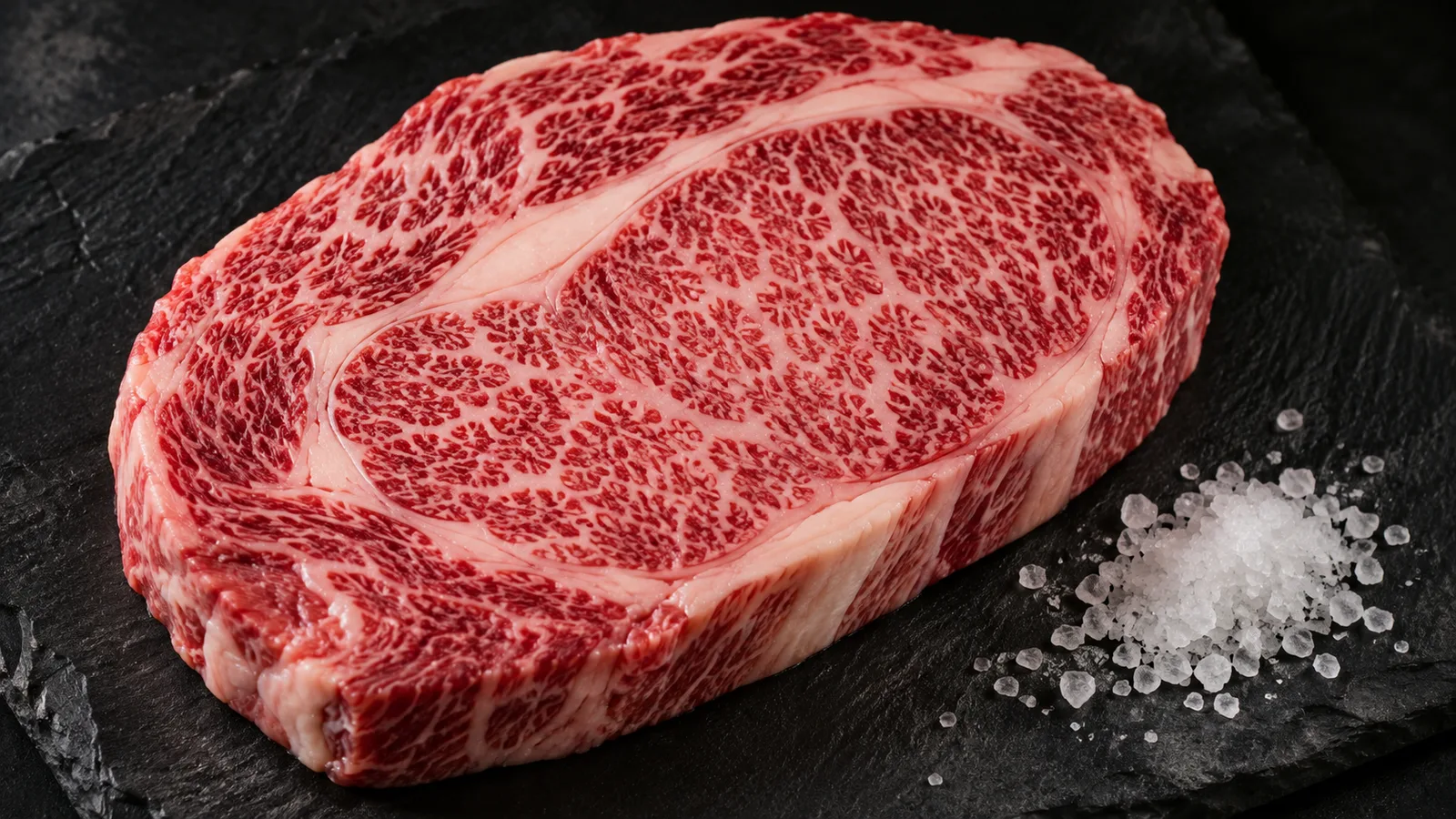
Marbling is fat laid down inside the muscle, the fine white flecks running through a raw steak. Cattle on an energy-dense grain ration lay down more of it, and spread it more evenly through the meat. That is the main reason grain-fed steaks eat softer and juicier. Grass-fed cattle still marble, especially a breed like Angus, but less heavily. Breed matters as much as feed here; see what is Angus beef? and, for the far end of the scale, what is Wagyu?
Texture
With less fat between the fibres, grass-fed beef has a firmer, more defined bite. Grain-fed beef feels looser and more yielding. On a fillet, which is tender whatever the feed, the difference is small. On a ribeye or sirloin you will feel it straight away.
Flavour
Grain-feeding gives a milder, sweeter, buttery flavour; much of what you taste is the fat. Grass-fed beef tastes more of the meat itself: savoury, slightly mineral, and sometimes with a grassy or gamey edge. Because the grass changes through the year, grass-fed beef varies a little more from batch to batch, which is part of its character.
Grass-fed and grain-fed by country
Where your beef comes from is a strong clue to how it was fed, because climate decides what a farmer can grow.
New Zealand: grass all year
New Zealand's mild, wet climate grows grass almost all year round, so its beef is overwhelmingly raised on pasture. AFFCO, a New Zealand processor in the trade since 1904, states that its cattle are fed on grass, hay and silage, not grain. New Zealand has no national marbling grade; brands run their own eating-quality systems.
Ireland: the Bord Bia Grass Fed Standard
Ireland is one of the few places that has put a number on "grass-fed". Bord Bia, the Irish food board, launched its Grass Fed Standard for beef in 2020. To meet it, cattle must get at least 90% of their lifetime diet from grass or forage and spend around 220 days a year on pasture, checked through Bord Bia's farm assurance audit. That is a standard for qualifying farms, not a promise for every piece of Irish beef, so look for it by name.
Australia: grass country with a grain finish
Most Australian cattle are raised on pasture, but Australia also has a large grain-feeding industry, much of it aimed at buyers who want heavy marbling. Australia grades marbling closely: the AUS-MEAT marble score runs from 0 to 9, and Meat Standards Australia (MSA) grades for eating quality, taking in how fine and evenly spread the marbling is.
Argentina: the Pampas, and the feedlot
Argentina built its name on cattle grazing the open grassland of the Pampas. Today many Argentine cattle spend their final months in feedlots, though beef sold to the EU under the "Hilton" quota must still be pasture-fed from weaning. Argentina has no national marbling grade.
| Country | Typical system | What to look for |
|---|---|---|
| New Zealand | Pasture all year | The supplier's feed statement |
| Ireland | Grass-based, long grazing season | The Bord Bia Grass Fed Standard by name |
| Australia | Pasture, with large grain-feeding programmes | "Grain-fed" or "grain-finished" on the label, plus MSA grading |
| Argentina | Pasture, increasingly finished in feedlots | The feed stated for the specific line |
Cooking grass-fed and grain-fed steak
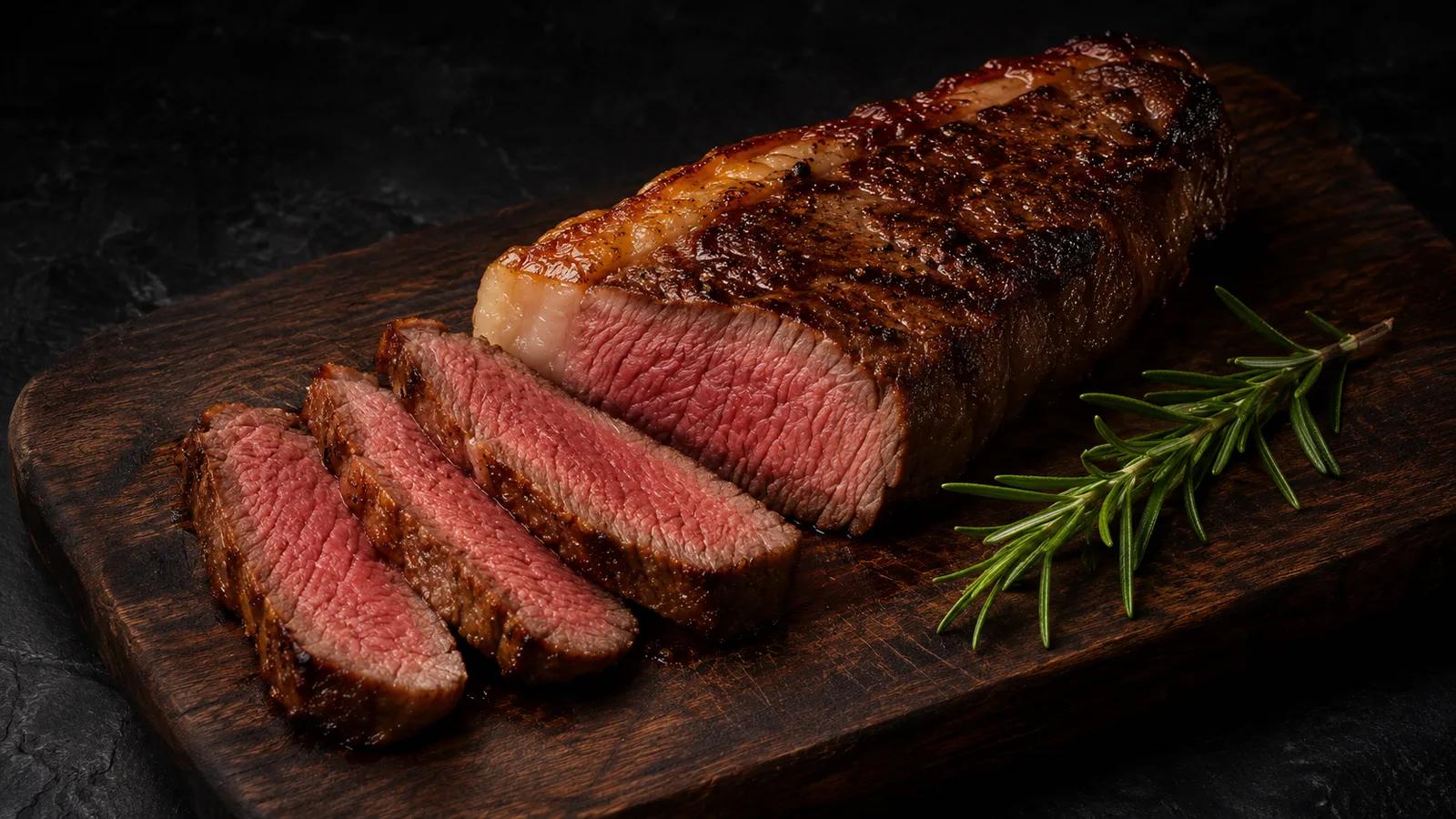
Both cook the same way: a dry surface, a very hot pan and a thermometer. The fat is what changes the margin for error.
- Grass-fed: watch the finish. With less marbling to keep it moist, a grass-fed steak goes from juicy to dry faster once it passes medium. For medium-rare, take it off at about 52°C in the centre and rest it for five minutes; it will rise a few degrees as it rests.
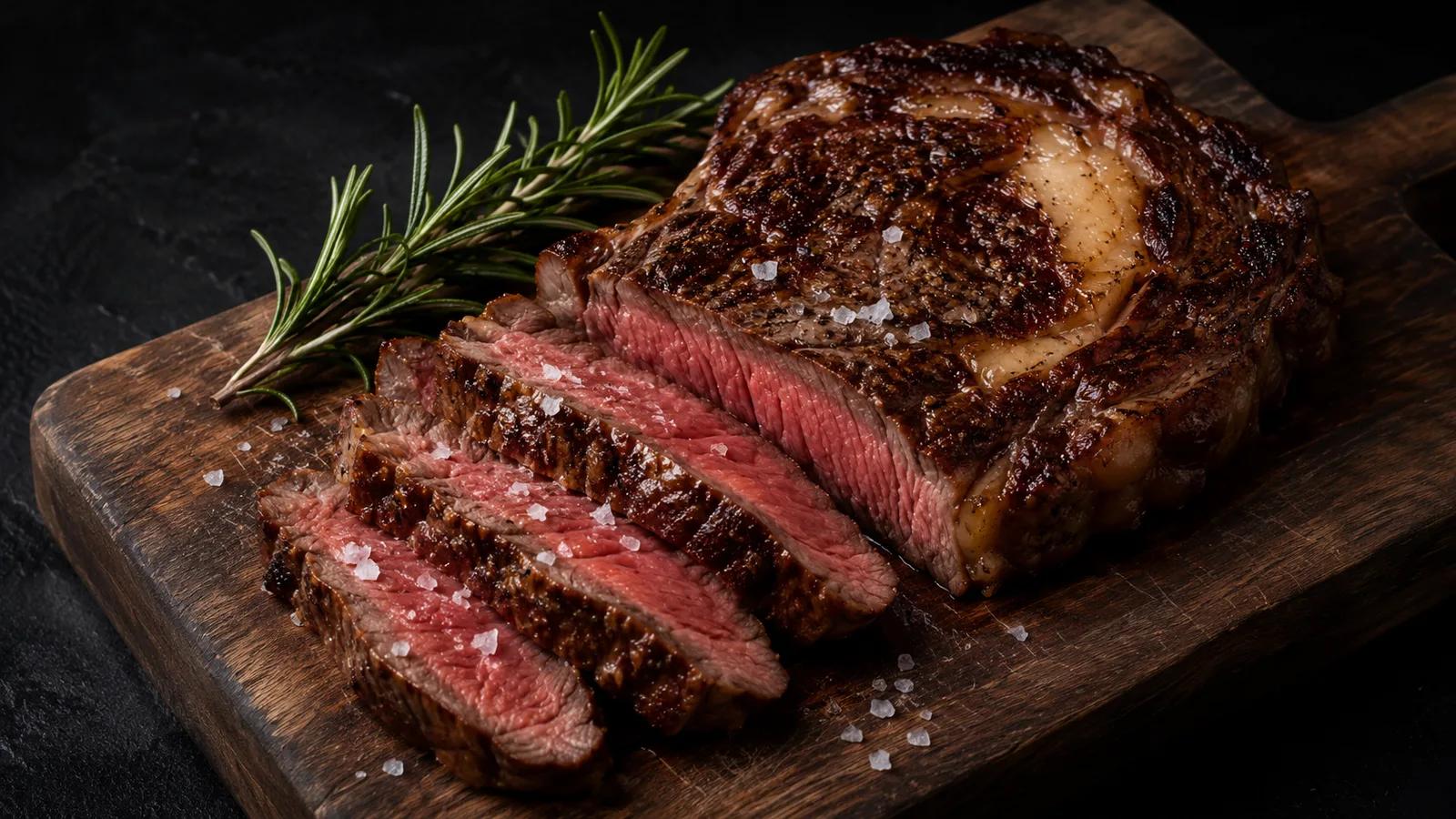
- Grain-fed: give the fat time. A heavily marbled ribeye is happy taken to about 55°C, so the fat inside softens and bastes the meat. It copes well with medium.
- Render the fat edge first. On ribeye and sirloin, stand the steak on its fat edge for a minute or two before searing the faces. It renders the fat and gives the pan something to sear in.
- Slice the flank across the grain. Flank wants a hard, fast sear to 52 to 54°C, then thin slices across the grain.
For timings by cut and thickness, see how to cook ribeye steak, how to cook sirloin steak and our steak cooking times chart.
Feed and halal are separate questions: halal depends on how the animal was slaughtered and certified, not what it ate. Our steaks are hand-cut by us in Wolverhampton. All our meat is halal: ask us for the certificate for any line, as our halal standards page explains. For how that works with imported beef, read is beef halal?
Questions and answers
What is the difference between grass-fed and grain-fed beef?
Most beef cattle spend the bulk of their lives on grass. The difference is how they are finished, the last few months before slaughter. Grass-fed cattle keep eating grass and forage such as hay and silage. Grain-fed cattle are moved onto a ration of grain, usually in a feedlot. Grain-feeding tends to lay down more marbling, so the beef eats softer, juicier and milder. Grass-fed beef is leaner and firmer, with a deeper beef flavour and often a creamy-yellow fat.
Does grass-fed beef taste different from grain-fed?
Yes. Grass-fed beef tastes more of beef: savoury, slightly mineral, sometimes with a grassy or gamey edge, and it changes a little with the seasons. Grain-fed beef is milder, sweeter and more buttery, because of the extra fat running through it. Neither is the right answer; it comes down to what you want from a steak.
Why is the fat on grass-fed beef yellow?
Grass is full of carotenoids, the same orange-yellow pigments found in carrots. Cattle store some of them in their fat, so beef finished on grass often has creamy or yellow fat. Grain has far less of these pigments, so grain-fed fat is whiter. Yellow fat is not a sign of age or poor quality.
Does grass-fed mean the cow never ate grain?
Not necessarily. In the UK there is no legal definition of "grass-fed", so it depends on who is making the claim. Ireland's Bord Bia Grass Fed Standard requires at least 90% of the lifetime diet from grass or forage. Some suppliers, such as AFFCO in New Zealand, state that their cattle are fed grass, hay and silage and no grain. Look for a named standard or a written statement rather than the words alone.
Which is better for steak, grass-fed or grain-fed?
It depends on the steak and the cook. For a rich, forgiving ribeye cooked to medium, grain-fed beef has the edge thanks to its marbling. For a lean sirloin or fillet cooked rare to medium-rare, where you want a clean, beefy flavour, grass-fed shines. The easiest way to decide is to cook the two side by side.