On this page
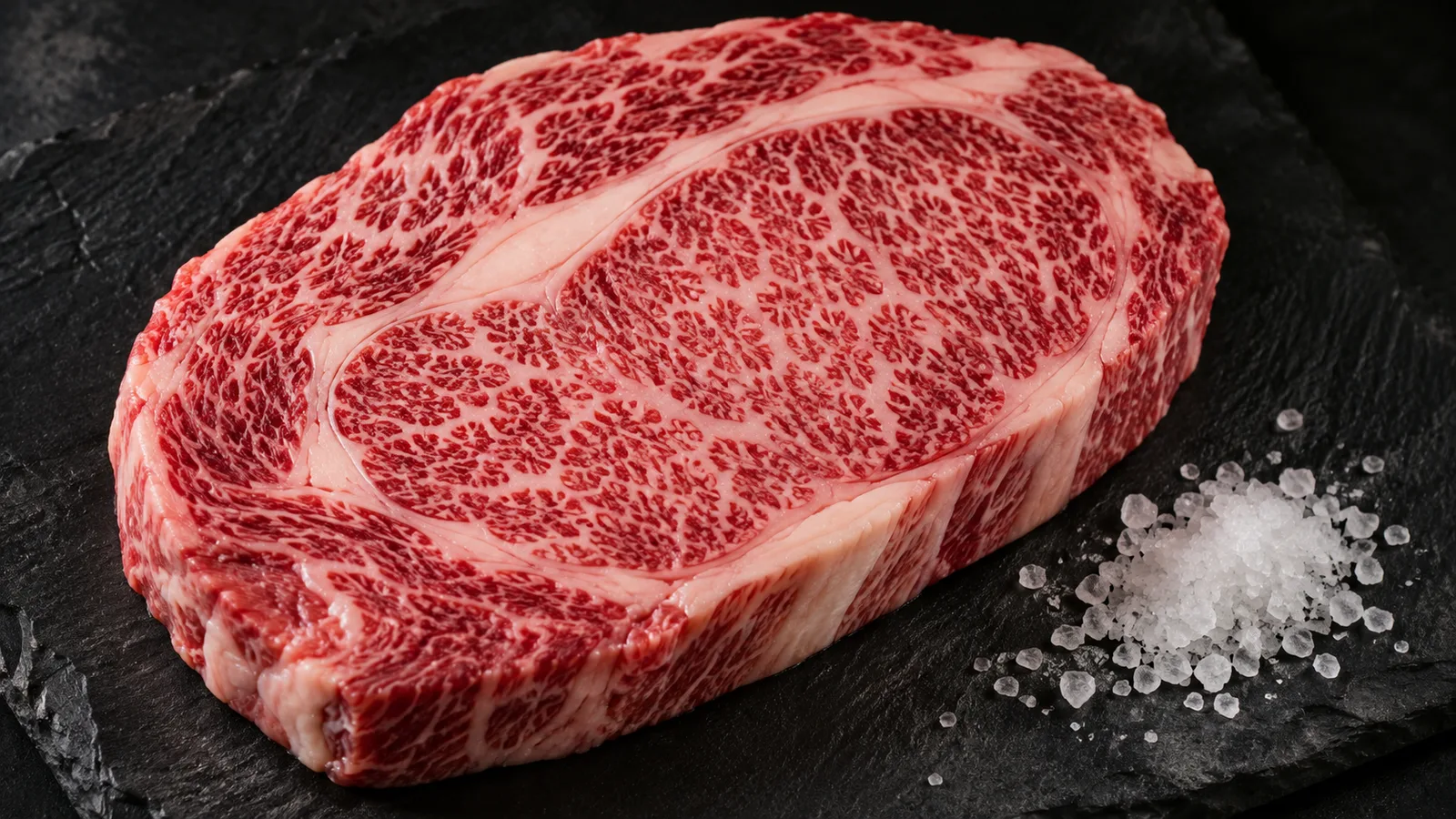
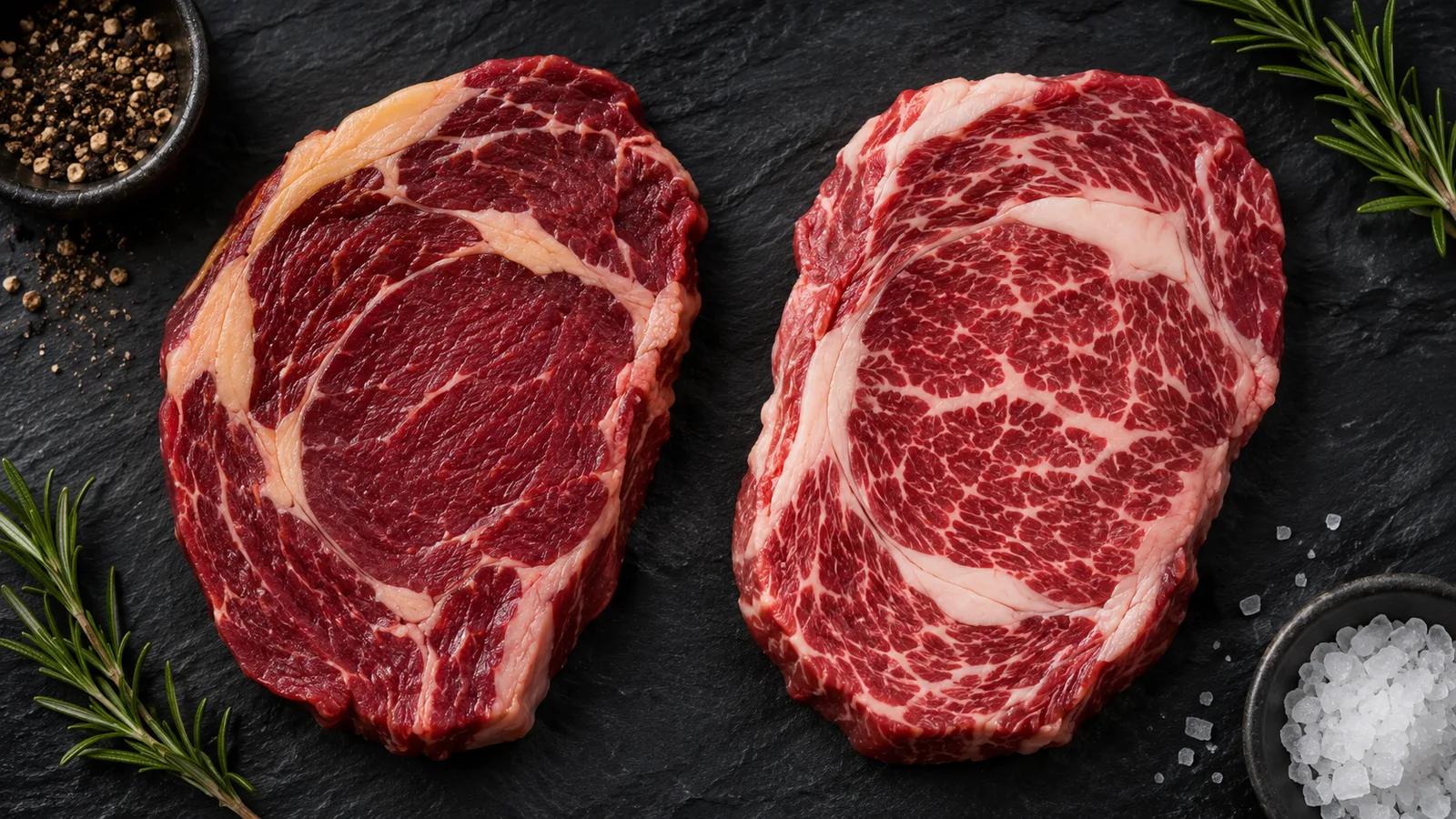
Angus beef is beef from Angus cattle, a Scottish breed now farmed all over the world. It is not a cut, a grade or a place. What makes Angus worth asking for is the way the breed lays down fat: it marbles readily, threading fine streaks of fat through the muscle, and marbling is what keeps a steak juicy and full of flavour.
You will see the same beef sold as Angus, Aberdeen Angus and Black Angus. They are one breed. What changes from label to label is who checked that the animal really is Angus, and how strictly. That part is worth understanding before you pay extra for the word.
Where Angus comes from: Aberdeenshire and Angus
The breed grew out of the polled (naturally hornless) black cattle of north-east Scotland, known locally as "doddies". In the early 1800s, breeders such as Hugh Watson of Keillor in Angus and later William McCombie of Tillyfour in Aberdeenshire selected and fixed the type: compact, black, hornless cattle that fattened well on grass.
The breed's records go back a long way:
- 1862: the first herd book is published, recording pedigrees.
- 1879: the breed society is formed. It is known today as the Aberdeen-Angus Cattle Society.
From Scotland, Angus spread to the Americas, Australia and New Zealand during the 1800s, which is why so much of the Angus beef on sale today is raised a long way from Aberdeenshire.
Angus, Aberdeen Angus and Black Angus: what the names mean
| Name | What it means |
|---|---|
| Aberdeen Angus | The breed's original British name |
| Angus | The same breed, the usual name outside the UK |
| Black Angus | Angus with the black coat; a coat-colour and marketing term, not a separate breed |
| Red Angus | The red-coated strain of the same breed |
Black Angus vs Red Angus
The black coat is dominant, so most Angus are black. Two black parents can still carry the red gene, and now and then a red calf is born. In Britain both colours sit in the same herd book. In the United States, Red Angus has its own breed association. On the plate there is no reliable difference between the two; the colour of the hide does not change the meat.
So when you see "Black Angus steak" on a menu, read it as "Angus steak". The word "Black" tells you about the coat, not about the grade, the feed or the flavour.
Why butchers rate Angus beef
Angus is a moderate-sized, early-maturing breed. It finishes well on grass and lays down marbling sooner and more evenly than many larger, leaner breeds. For a butcher that means:
- Marbling. Fine streaks of intramuscular fat, which melt as the steak cooks and keep it juicy.
- A good fat cover. Enough outside fat to protect the carcass during ageing, without excessive waste.
- Records. Angus has been pedigree-recorded since 1862, and breeders select hard for carcass quality.
Angus does not marble like Wagyu. Think of it as the sweet spot: noticeably richer than everyday commercial beef, still beefy and firm enough to taste of steak rather than butter.
How each country checks "Angus"
Because Angus sells, the word gets stretched. Each country handles it differently, and this matters more than the breed name itself.
| Country | What "Angus" has to mean |
|---|---|
| UK | The Aberdeen-Angus Cattle Society's sire-verification scheme, with samples tested at slaughter |
| Australia | At least 75% Angus to be sold as "Angus"; brands can be verified by Angus Australia |
| Argentina | Association inspectors check the cattle's coat and traits before and at slaughter |
| New Zealand | No legal definition; brand programmes set their own rules |
| United States (for comparison) | Certified Angus Beef is a brand: mainly a black hide plus 10 carcass specifications |
UK: sire verification
In Britain the Aberdeen-Angus Cattle Society runs a sire-verification scheme. The sire has to be a registered Aberdeen-Angus bull, and samples taken at slaughter are tested to confirm the animal's parentage. So an Aberdeen Angus steak from British beef carries real weight when it comes with the Society's backing.
Australia: 75% Angus and Angus Australia verification
In Australia, plain "Angus" means at least 75% Angus content. Cattle at 50% Angus have to be labelled "Angus 50", "Angus F1" or "Angus composite" instead. On top of that, Angus Australia (whose legal name is still the Angus Society of Australia) verifies brands under its Verified Black Angus Beef programme. Cattle must be at least 75% Angus, with a predominantly black or red hide, polled, and with no Bos indicus or dairy traits, based on the vendor's declaration and a visual assessment.
Argentina: inspected by the Angus association
Argentina's "Carne Angus Certificada" (certified Angus beef) is checked in person. Inspectors from the Argentine Angus Association look at the cattle at the feedlot, in the pens and at slaughter. The animals must have a black or red coat, be polled and have no more than four permanent teeth, a measure of age; some zebu influence is allowed. Marbling is checked at the 4th rib, and the label on each box can be traced back to the lot.
New Zealand: brand programmes
New Zealand has no legal definition of Angus. The programmes that use the name set their own rules, typically at least 75% Angus content and a registered or performance-recorded Angus sire. With NZ Angus, the name is only as good as the programme behind it.
What "Angus" does not tell you
Angus is a breed, so it says nothing about:
- Feed. Angus can be grass-fed or grain-fed, and the two eat very differently. Grain-fed tends to be richer and more buttery; grass-fed is firmer and beefier. More in grass-fed vs grain-fed beef.
- Grade. Marbling scores and grades come from separate systems, such as Meat Standards Australia.
- Origin. Angus is raised all over the world. The country of birth, rearing and slaughter must be on the label.
- Halal status. That depends on slaughter and certification, not breed. See is beef halal?
Our Angus steaks
Our Angus steaks are the ribeye, sirloin, fillet and tomahawk. The ribeye and sirloin are hand-cut by us in Wolverhampton at 250 to 300g.
 Aberdeen Angus Ribeye SteakFrom £14.00
Cooking Angus steak
Angus needs no special treatment, just respect for its fat.
- Temper and dry. Take the steak out of the fridge 30 minutes before cooking and pat it dry.
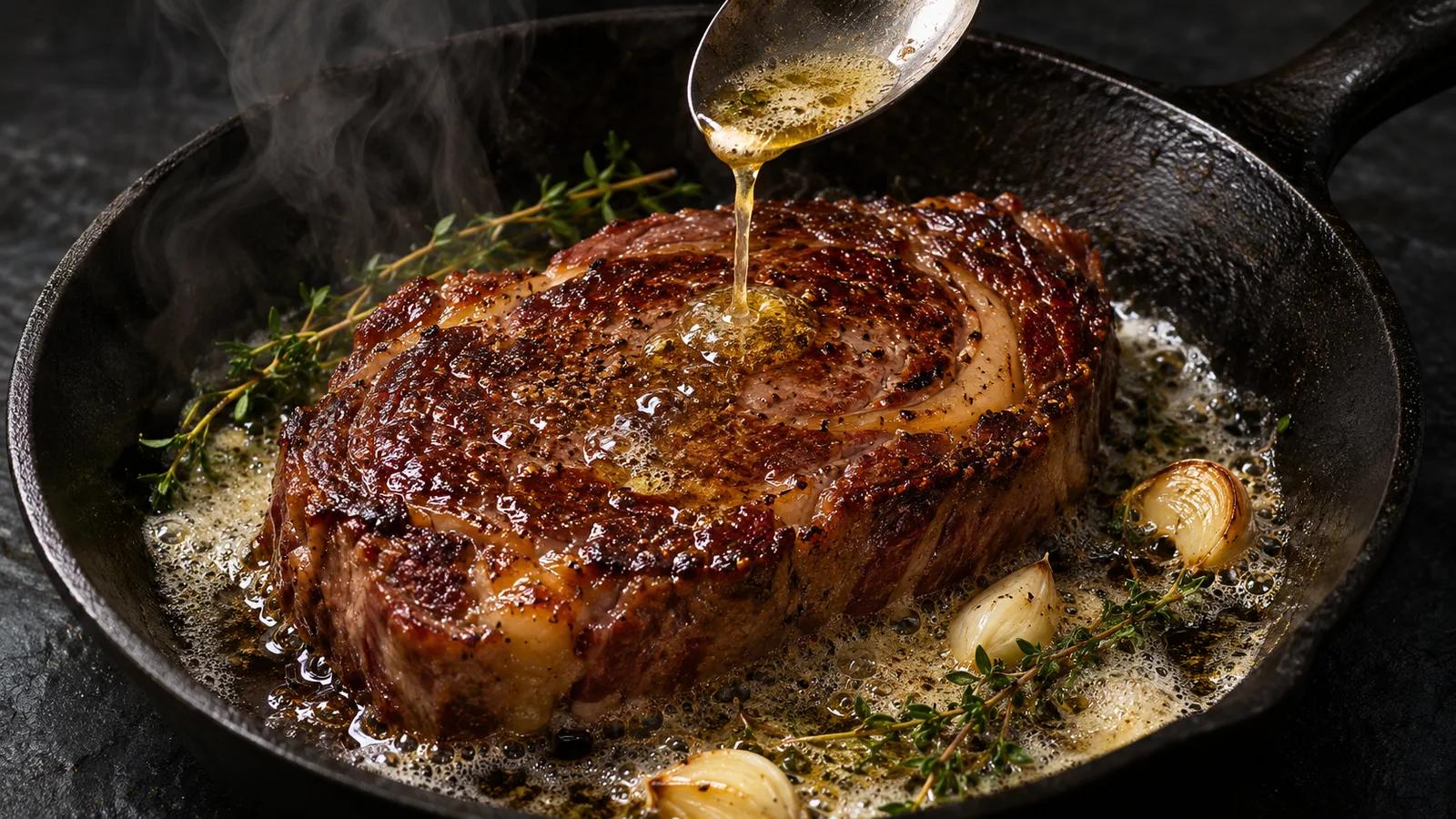
- Get the pan very hot. Cast iron or carbon steel. Render the fat edge of a sirloin or ribeye first by standing it on its side for a minute or two.
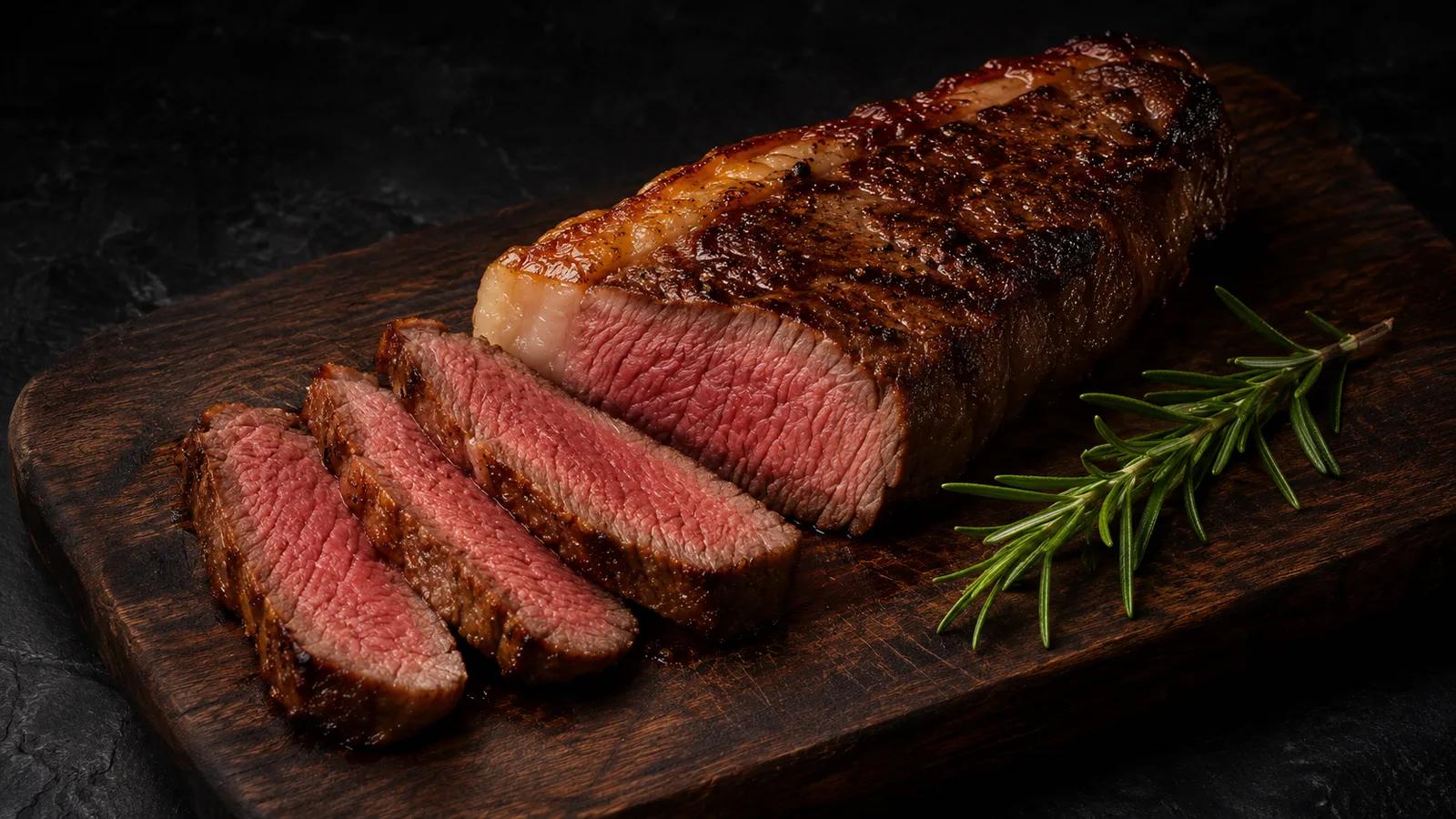
- Cook to temperature, not time. For medium-rare, take it off at about 52°C in the centre; it rises a few degrees as it rests. A grain-fed ribeye is happy taken a touch further, to about 55°C, so the marbling softens.
- Flank: hot and fast. Sear hard, take it off at 52–54°C, rest it, then slice thinly across the grain. Cut along the grain and it chews like string.
For the details by cut, see how to cook ribeye steak, how to cook sirloin steak and the steak cooking times chart.
Halal Angus beef
Halal has nothing to do with breed. Angus is halal when it is slaughtered and certified that way. All our meat is halal. Ask us for the certificate for any line: our halal standards page says how.
Questions and answers
What is Angus beef?
Angus beef comes from Angus cattle, a breed that began in Aberdeenshire and Angus in north-east Scotland. The cattle are naturally hornless and known for marbling well, which is why Angus steaks are prized for flavour and juiciness. Angus is a breed, not a cut or a grade, so it tells you nothing on its own about how the animal was fed or how the meat was graded.
Is Black Angus the same as Aberdeen Angus?
Yes. Angus, Aberdeen Angus and Black Angus are the same breed. "Black" describes the coat colour, and the name is used mostly in the United States and Australia. Red Angus is the red-coated strain of the same breed. In Britain the breed society registers both colours in one herd book.
What does "Angus" on a label actually guarantee?
It depends on the country. In the UK the Aberdeen-Angus Cattle Society runs a sire-verification scheme. In Australia, beef sold as "Angus" must be at least 75% Angus, and brands can be verified by Angus Australia. In Argentina, inspectors from the Angus association check the cattle before and at slaughter. New Zealand has no legal definition, so it comes down to the rules of each brand programme.
Is Angus beef better than regular beef?
Angus is a breed with a strong record for marbling, and well-marbled beef tends to eat juicier and richer. But breed is only one part of it. Feed, age, how the carcass was handled and how long the meat was aged all matter just as much, so a well-raised steak from another breed can eat as well as an ordinary Angus one.
Is Angus beef halal?
It can be. Halal depends on how the animal was slaughtered and certified, not on its breed, so Angus beef is halal when it comes from a certified plant. All our meat is halal. Ask us for the certificate for any line.